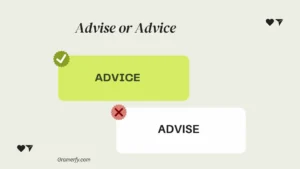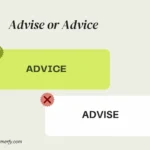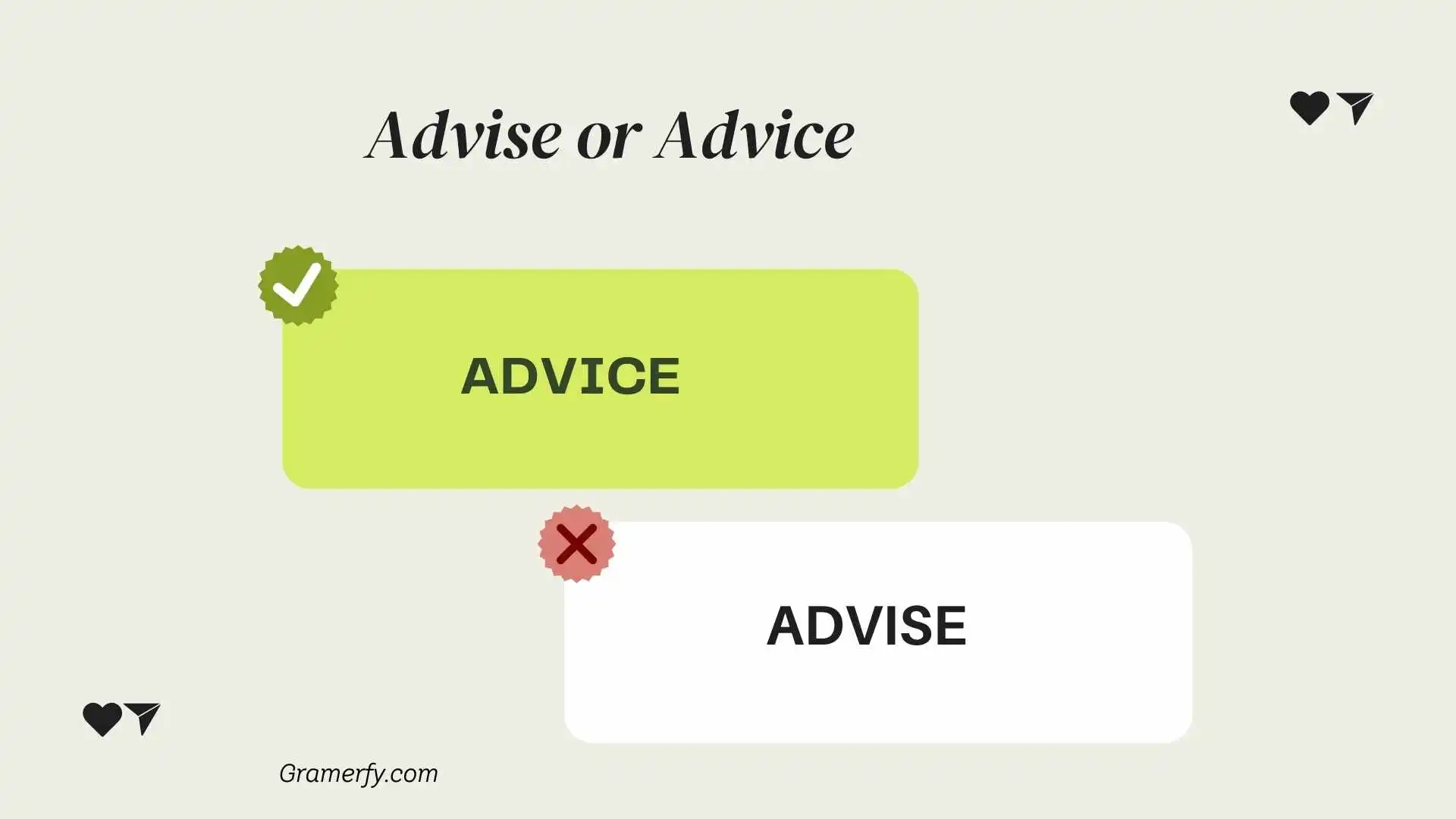
Have you ever paused while writing and wondered whether to use “advise” or “advice”? You’re not alone. These two words confuse millions of English learners and even native speakers. At first glance, they look almost identical.
However, their meanings and usage are completely different. One tiny letter can change how your sentence sounds and what it means.
For example, you might say, “My friend gave me great advice,” but you would write, “She advised me to stay calm.” Simple, right? Still, many people mix them up in emails, essays, and social media posts. That small mistake can make writing feel less professional.
What Does “Advice” Mean?
Advice is a noun, which means it is a thing an opinion, suggestion, or recommendation given to someone.
- Example 1: I asked my teacher for some advice on studying for exams.
- Example 2: She gave me good advice about saving money.
Key points about advice:
- It is uncountable, so we do not say “an advice” (wrong).
- Use it when talking about a recommendation, tip, or suggestion.
- Common verbs used with advice: give, offer, seek, follow, ignore.
What Does “Advise” Mean?
Advise is a verb, which means it is an action — the act of giving suggestions or recommendations.
- Example 1: I advise you to read this book.
- Example 2: Doctors often advise their patients to exercise daily.
Key points about advise:
- It is always an action word (verb).
- Common sentence patterns: advise someone to do something.
- Tip: Think of “advise” = to give advice.
Advise vs Advice: Quick Comparison Table
| Feature | Advice | Advise |
| Part of Speech | Noun | Verb |
| Meaning | A suggestion or recommendation | To give a suggestion or recommendation |
| Example | She gave me excellent advice. | I advise you to take a break. |
| Common Mistake | Saying “an advice” (wrong) | Using advise as a noun (wrong) |
| Tip | Remember “c-e” = noun | Remember “s-e” = verb |
Common Mistakes with Advise and Advice
Even experienced writers sometimes confuse these words. Here are common mistakes and how to avoid them:
- Using “advise” as a noun
- ❌ Wrong: He gave me some advise.
- ✅ Correct: He gave me some advice.
- ❌ Wrong: He gave me some advise.
- Using “advice” as a verb
- ❌ Wrong: I advice you to study more.
- ✅ Correct: I advise you to study more.
- ❌ Wrong: I advice you to study more.
- Adding “an” before advice
- ❌ Wrong: She gave me an advice.
- ✅ Correct: She gave me advice.
- ❌ Wrong: She gave me an advice.
- Spelling confusion
- Remember: “c” → noun (advice), s → verb (advise)
- Remember: “c” → noun (advice), s → verb (advise)
Spelling Tips to Remember the Difference
- Advise ends with “-se”, which is similar to “verb” action — you do something.
- Advice ends with “-ce”, which is like a thing — a noun you can receive.
- Quick memory trick:
- Advice = Noun → Think c = collection of suggestions.
- Advise = Verb → Think s = suggest or share advice.
- Advice = Noun → Think c = collection of suggestions.
Multiple Examples of Advice and Advise in Sentences
Using Advice (Noun):
- My parents always give me helpful advice.
- Here’s some advice: never rush your work.
- Can I ask for your advice on this matter?
Using Advise (Verb):
- I advise you to check your answers before submitting.
- Doctors advise patients to avoid junk food.
- She advised me not to trust that stranger.
How to Use Advise and Advice in Different Situations
- Formal Writing
- Advise: “The lawyer advised the client to sign the contract.”
- Advice: “The lawyer’s advice was very useful.”
- Advise: “The lawyer advised the client to sign the contract.”
- Everyday Conversation
- Advise: “I advise you to take an umbrella today.”
- Advice: “Thanks for your advice about the party.”
- Advise: “I advise you to take an umbrella today.”
- Emails and Letters
- Advise: “Could you advise me on the best way to proceed?”
- Advice: “I appreciate your advice on this matter.”
- Advise: “Could you advise me on the best way to proceed?”
Phrases and Collocations
Common with Advice
- Ask for advice
- Give advice
- Follow advice
- Ignore advice
Example: She always follows her teacher’s advice.
Common with Advise
- Advise someone to do something
- Advise against something
- Advise on something
Example: I advise you to take a break.
FAQs (People Also Ask)
1. What is the difference between advise and advice?
Answer: Advise is a verb (action), while advice is a noun (thing). Think of advice as a tip, and advise as giving that tip.
2. Can I say “an advice”?
Answer: No, advice is uncountable. Correct: “She gave me advice.”
3. How do I remember the difference between advise and advice?
Answer: Advise ends with s → action (verb). Advice ends with c → thing (noun).
4. Is advise formal or informal?
Answer: Advise is neutral and can be used in both formal and informal contexts.
5. Can advice be used in plural?
Answer: No, advice is uncountable. Use “pieces of advice” instead.
- Example: She gave me three pieces of advice.
Tips for Beginners
- Always check if the sentence needs a noun or a verb.
- Remember: noun = advice, verb = advise.
- Practice by writing your own sentences using both words.
- Reading English books, blogs, or articles will help you see correct usage naturally.
Conclusion
Mastering advise vs advice is easier when you understand that advice is a noun and advise is a verb. Always remember the simple spelling tips: c = thing, s = action. By practicing examples, checking your sentences, and following common collocations, you can confidently use these words in conversation, writing, emails, or formal documents.
Avoid common mistakes like using “an advice” or using advise as a noun. With consistent practice, distinguishing between advise and advice will become second nature. Clear communication in English depends on these small but important details, and mastering them will make your writing and speech sound professional, precise, and natural.