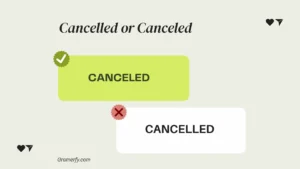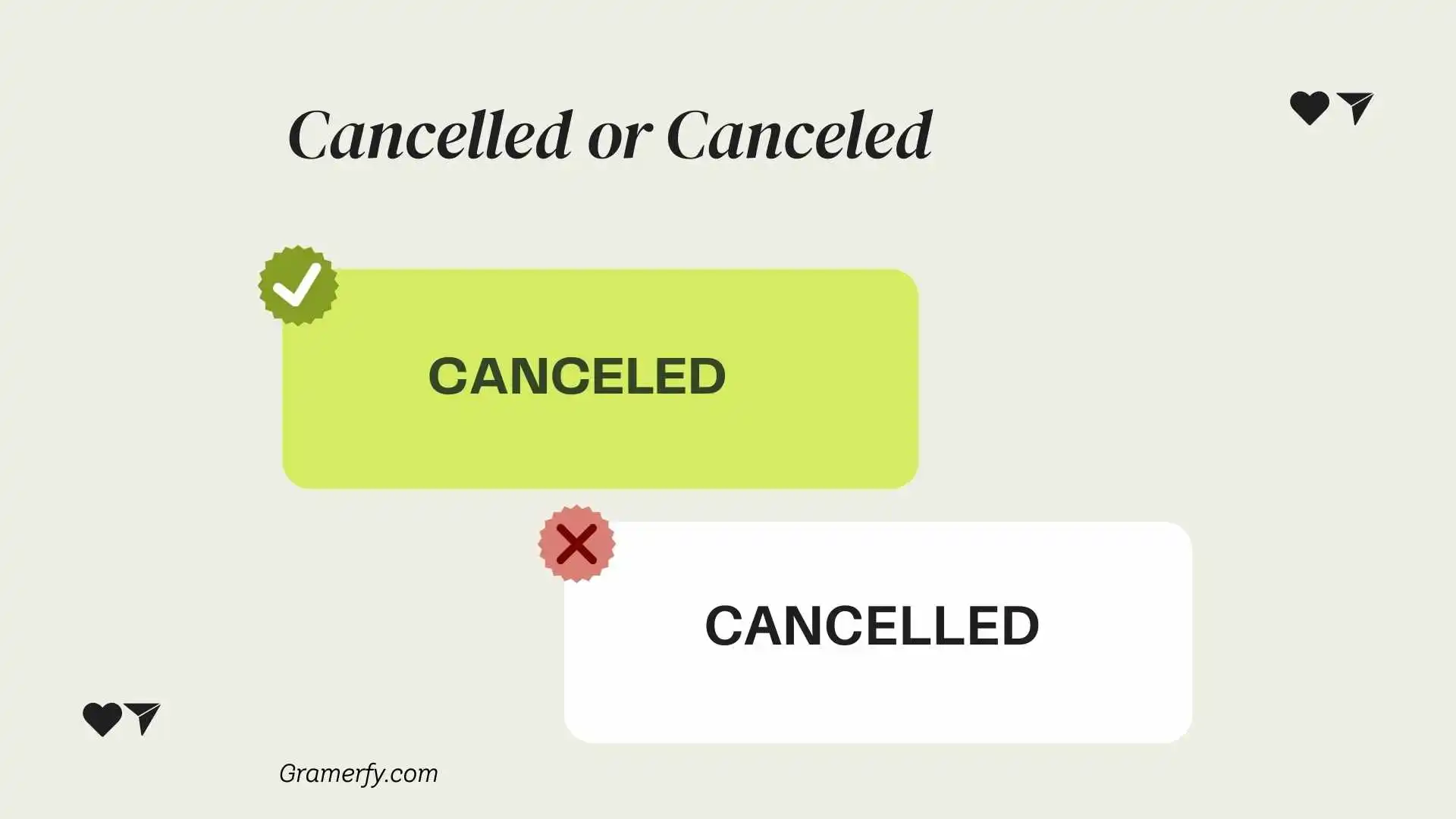
Spelling mistakes can quietly weaken your writing. One tiny example creates a surprisingly big debate: “Cancelled or Canceled?”
At first glance, both look correct. However, many writers pause and wonder which spelling they should actually use. Is one wrong? Do Americans and British writers follow different rules? Or does it depend on the context?
This small difference often confuses students, bloggers, and even professional writers. You might see “canceled” in American websites, while “cancelled” appears in British publications. As a result, people question which version fits their writing style.
What Does “Cancelled” Mean?
The word “cancelled” is the British English spelling of the past tense and past participle of “cancel.”
- Meaning: To decide that something will not happen or to stop something planned.
- Usage Example:
- The concert was cancelled due to heavy rain.
- My meeting has been cancelled by the manager.
- The concert was cancelled due to heavy rain.
Key point: “Cancelled” is preferred in the UK, Australia, Canada, and other countries that follow British English.
What Does “Canceled” Mean?
The word “canceled” is the American English spelling of the same past tense and past participle of “cancel.”
- Meaning: Exactly the same as “cancelled”, to stop or terminate something.
- Usage Example:
- The flight was canceled because of the snowstorm.
- He canceled his subscription last week.
- The flight was canceled because of the snowstorm.
Key point: Use “canceled” in the United States and other regions following American English conventions.
Cancelled vs. Canceled: Quick Comparison
| Feature | Cancelled | Canceled |
| Spelling | Double “l” | Single “l” |
| Region | British English | American English |
| Examples | The show was cancelled. | The show was canceled. |
| Usage | UK, Australia, Canada | USA |
Tip: Both are correct. The choice depends on which English style you follow.
Common Mistakes to Avoid
Many learners make mistakes when using these words. Here are some tips:
- Mixing UK and US spellings
- ❌ The flight was cancelled yesterday. (in US English context)
- ✅ The flight was canceled yesterday.
- ❌ The flight was cancelled yesterday. (in US English context)
- Confusing with similar words
- ❌ The appointment was cancel.
- ✅ The appointment was canceled/cancelled.
- ❌ The appointment was cancel.
- Wrong verb form in sentences
- ❌ I will cancelled the event.
- ✅ I will cancel the event. (future tense does not use “-ed”)
- ❌ I will cancelled the event.
- Spelling errors
- Remember: UK English doubles the “l” in past tense (cancelled)
- US English keeps it simple (canceled)
- Remember: UK English doubles the “l” in past tense (cancelled)
How to Remember the Difference
- Think “double L for UK” and “single L for US.”
- If writing for an American audience, stick with canceled.
- If writing for British or Australian audiences, use cancelled.
Usage in Different Tenses
| Tense | British English | American English |
| Present | cancel | cancel |
| Past | cancelled | canceled |
| Future | will cancel | will cancel |
| Present Perfect | has/have cancelled | has/have canceled |
Example Sentences:
- British: She has cancelled her plans for the weekend.
- American: She has canceled her plans for the weekend.
Examples in Real Life
Travel
- The train was cancelled due to maintenance. (UK)
- Our flight was canceled last night. (US)
Events
- The wedding was cancelled because of the storm.
- The concert was canceled after the singer fell ill.
Subscriptions & Services
- He cancelled his magazine subscription. (UK)
- She canceled her gym membership. (US)
Daily Life
- I had to cancel my lunch plans.
- They cancelled the class because the teacher was sick.
Spelling Tips
- Check your audience: British or American English?
- Use double L for UK English: cancelled, travelling, labelled.
- Use single L for US English: canceled, traveling, labeled.
- Always match verbs in the same text: don’t mix “cancelled” and “canceled.”
Frequently Asked Questions (FAQs)
1. Is “cancelled” wrong in American English?
No. It’s not wrong, but American English prefers canceled with a single “l.” Using “cancelled” might look unusual to US readers.
2. Can I use “canceled” in UK English?
Yes, it is understood, but cancelled is the standard spelling in British English.
3. Why is there a spelling difference?
American English often simplifies double letters in past tense verbs, whereas British English retains them.
4. Is there a difference in meaning?
No. Both cancelled and canceled mean exactly the same thing.
5. Which one should I use in formal writing?
Follow your audience:
- UK/Australia/Canada → cancelled
- USA → canceled
6. How do I remember the difference?
Think: “UK = double L”, “US = single L.” It’s simple and easy to recall.
Quick Summary
- Cancelled → UK English
- Canceled → US English
- Both are correct, meaning “to stop or terminate.”
- Use consistent spelling in your writing.
- Check your audience before choosing the form.
Conclusion
In the end, whether you write cancelled or canceled depends on your audience. Both spellings are correct and share the same meaning, terminating or stopping something. Remember to stay consistent with your chosen style, use the correct verb tense, and avoid mixing UK and US spellings in the same text.
By following these simple rules and tips, you can confidently write and speak English without worrying about spelling mistakes. Consistency is key, and understanding the regional difference will make your writing look professional and polished. With practice, using cancelled or canceled will become second nature.