Ever wondered if the word you’re using is cudos or kudos? Many people stumble over these two, unsure which one correctly celebrates achievements or gives praise.
Understanding the difference not only sharpens your language skills but also ensures your compliments hit the right note. Kudos is widely recognized in English as a way to applaud someone’s success or effort, while cudos is often mistakenly used due to spelling confusion.
In professional emails, casual chats, or social media posts, using the right term reflects both knowledge and attention to detail. By the end of this guide, you’ll confidently choose the correct word and impress everyone with your precise language skills.
What Does “Kudos” Mean?
Kudos is a noun that originates from the Greek word kydos, meaning praise, glory, or honor. In English, it is used to give recognition or congratulate someone for an achievement.
Key Points:
- It is always singular in form, but its meaning implies praise for one or multiple achievements.
- The word is uncountable, so you don’t say “a kudos” or “kudoses.”
- Pronunciation: /ˈkuː.doʊs/ (sounds like “koo-dos”).
Example Sentences:
- Kudos to Sarah for completing the project ahead of schedule.
- He deserves kudos for his outstanding performance in the competition.
- Kudos all around for the team’s hard work!
Common Misunderstanding: “Cudos” vs. “Kudos”
Many people mistakenly write “cudos” instead of “kudos.”
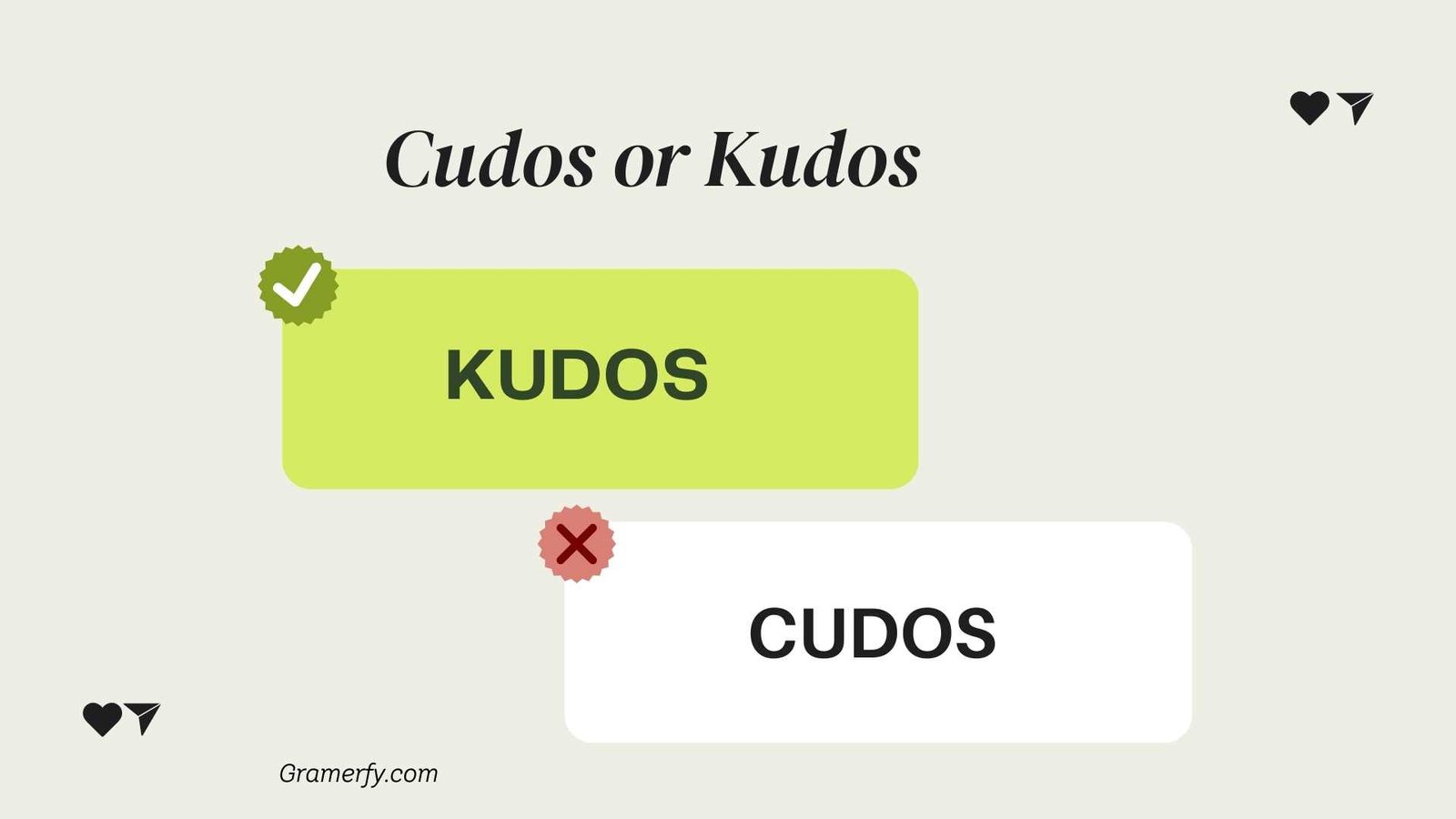
- Cudos: ❌ Incorrect spelling
- Kudos: ✅ Correct spelling
The confusion might come from the fact that the letter “k” in “kudos” sounds like a “c,” or because people assume it follows normal English spelling rules. But the correct spelling is always “kudos.”
Quick Tip: Think of “kudos” as coming from Greek; Greek words often start with “k” instead of “c.”
Comparison Table: Cudos vs Kudos
| Feature | Cudos | Kudos |
| Correct spelling? | ❌ No | ✅ Yes |
| Part of speech | N/A | Noun |
| Meaning | ❌ None | Praise or honor |
| Usage | ❌ Not used | ✅ Widely used |
| Plural form | ❌ N/A | ❌ Uncountable |
How to Use “Kudos” Correctly
1. In Formal Writing
- Use kudos when praising achievements in essays, emails, or reports.
- Example: Kudos to the research team for their innovative findings.
2. In Informal Writing
- Perfect for social media, messages, or casual conversations.
- Example: Kudos to my friend for winning the art competition!
3. With Names or Pronouns
- You can mention the person directly or indirectly.
- Examples:
- Kudos to John!
- She deserves kudos for her dedication.
- Kudos to John!
Common Mistakes and Spelling Tips
Mistakes People Often Make
- Writing “cudos” instead of “kudos” – the most common error.
- Adding “a” before kudos – incorrect because kudos is uncountable.
- ❌ A kudos to you
- ✅ Kudos to you
- ❌ A kudos to you
- Pluralizing it – you don’t say “kudoses” or “kudoi.”
Spelling Tips
- Remember: k not c.
- Think of it as praise or honor, not an item you can count.
- Use it only as a noun to express admiration or recognition.
Multiple Examples of Correct Usage
- Kudos to everyone who participated in the charity event.
- The author deserves kudos for her compelling storytelling.
- Kudos for handling that difficult situation so well!
- I want to give kudos to my colleague for their hard work.
- Kudos to the team for achieving record sales this quarter.
FAQs (People Also Ask)
1. Is it “cudos” or “kudos”?
Answer: The correct spelling is kudos. “Cudos” is a common misspelling.
2. Can you say “a kudos”?
Answer: No, kudos is uncountable, so you don’t use “a” before it. Say “kudos to you” instead.
3. Is kudos singular or plural?
Answer: Kudos is singular in form but uncountable. It refers to praise for one or many achievements.
4. Can I use kudos in formal writing?
Answer: Yes! Kudos works in both formal and informal contexts when recognizing achievements.
5. What is the origin of kudos?
Answer: Kudos comes from Greek, meaning glory or fame, and has been adopted into English as a way to express praise.
Fun Ways to Use Kudos in Daily Life
- At work: Kudos to the marketing team for launching a successful campaign!
- On social media: Kudos to my best friend for running a marathon!
- In school or college: Kudos to the students for winning the debate competition!
- Among friends: Kudos for helping me move last weekend!
Synonyms of Kudos
Using synonyms can make your writing more versatile:
- Praise
- Recognition
- Acclaim
- Honor
- Compliments
Example: The manager gave high praise (kudos) to the team for their creativity.
Common Phrases with Kudos
- Give kudos: to praise someone
- We must give kudos to the volunteers for their dedication.
- We must give kudos to the volunteers for their dedication.
- Deserve kudos: to be worthy of praise
- She deserves kudos for finishing the project on time.
- She deserves kudos for finishing the project on time.
- Kudos to someone: expressing admiration
- Kudos to the chef for a delicious meal!
- Kudos to the chef for a delicious meal!
Conclusion
Using kudos correctly is simple once you remember a few key points: Whether in casual chats, social media posts, or formal writing, kudos adds a friendly and appreciative tone.
Next time someone does something great, you’ll know exactly how to give them the right recognition! Remember, a small word like kudos can make a big difference in showing appreciation. So go ahead and use it confidently!