In every story, conversation, or even casual interaction, the words exchanged carry the magic of connection this is where dialog or dialogue steps in. But have you ever wondered why some conversations linger in your mind while others vanish instantly?
That’s the power of a well-crafted dialogue. Whether in movies, books, or real life, dialogue breathes life into characters, conveys emotions, and drives the story forward. It’s more than just talking; it’s an art of expression, a bridge between thoughts and feelings.
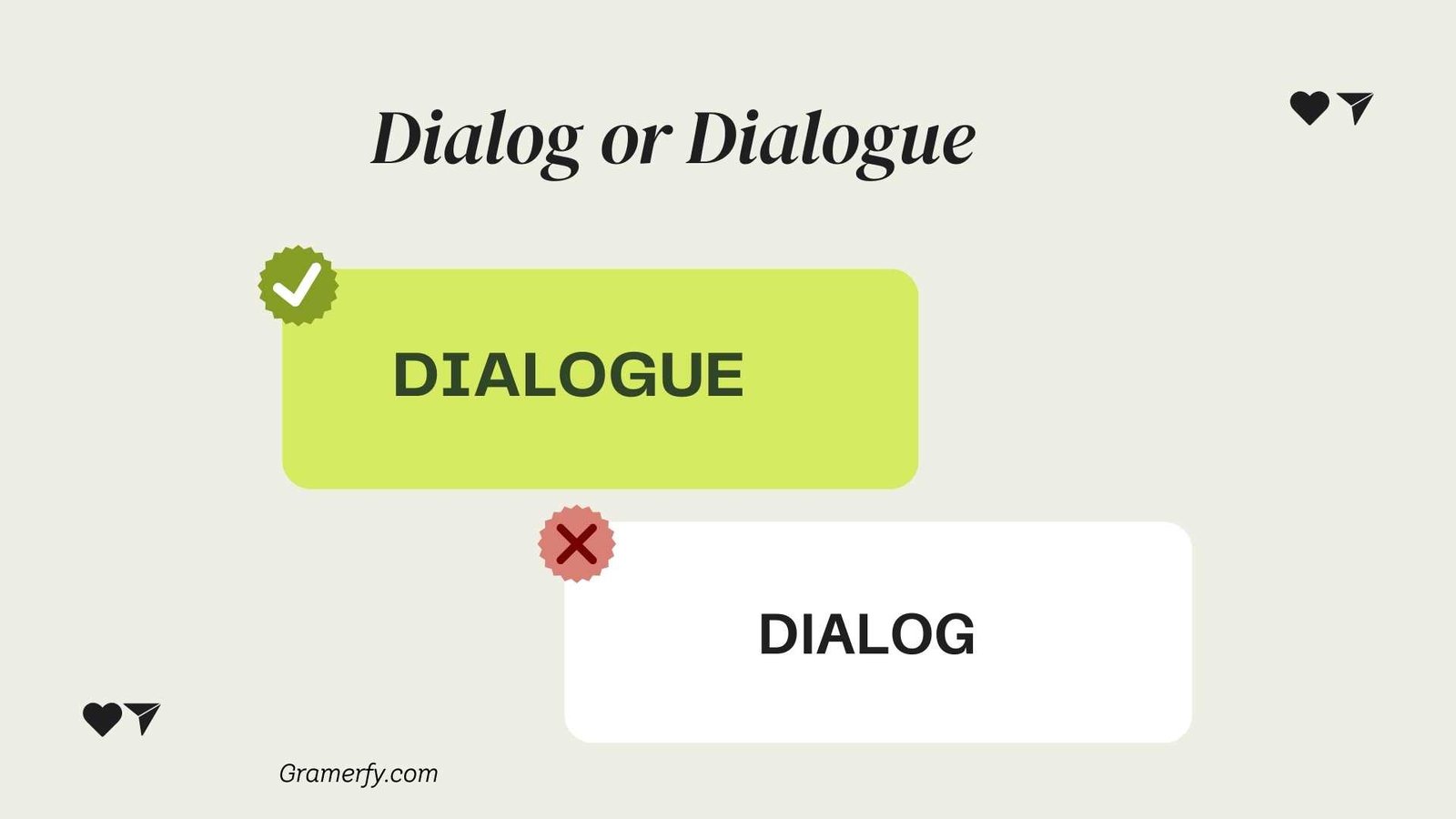
Understanding the subtle difference between “dialog” and “dialogue,” and knowing how to use them effectively, can elevate communication to a whole new level.
What Does “Dialog” Mean?
The word “dialog” is a modern, simplified spelling of “dialogue.” It is mostly used in American English, particularly in the fields of computers, software, and technical writing.
- Meaning: A conversation between two or more people or a system message box in a computer program.
- Usage: Typically in informal writing, software instructions, or technical contexts.
Examples:
- The software displayed a dialog box asking me to save the file.
- The app includes a dialog to guide users through settings.
- They created a dialog between two characters in the game.
What Does “Dialogue” Mean?
“Dialogue” is the traditional and more widely accepted spelling. It is used in formal English, literature, and everyday writing.
- Meaning: A conversation between two or more people, especially in books, plays, movies, or speeches.
- Usage: Preferred in academic writing, novels, newspapers, and general communication.
Examples:
- The novel contains a witty dialogue between the main characters.
- The debate ended with a healthy dialogue about climate change.
- Teachers encourage dialogue to improve students’ communication skills.
Dialog vs Dialogue: Side-by-Side Comparison
| Feature | Dialog | Dialogue |
| Spelling | Modern, shortened | Traditional, standard |
| Region | Mostly American English | International, British and American English |
| Context | Computers, software, informal writing | Literature, formal writing, everyday communication |
| Example | Click OK in the dialog box. | The play featured an emotional dialogue. |
| Formality | Less formal | More formal |
Key Point: If you are writing for technical purposes or software, dialog is acceptable. For everything else, use dialogue.
Common Mistakes With Dialog and Dialogue
Even native speakers get confused between these two. Here are the top mistakes to avoid:
- Using “dialog” in formal writing:
❌ Wrong: The book included an interesting dialog.
✅ Correct: The book included an interesting dialogue. - Using “dialogue” in technical software writing:
❌ Wrong: A dialogue box appeared.
✅ Correct: A dialog box appeared. - Mixing the two randomly: Consistency is key. Choose one based on context and stick with it.
Spelling Tips to Remember
- Tip 1: If it’s a computer-related context, think “shorter = faster” → use dialog.
- Tip 2: If it’s about people talking in real life, stories, or essays, always use dialogue.
- Tip 3: Remember the “ue” at the end of dialogue as a signal for formal or literary writing.
Examples in Different Contexts
1. Literature and Stories
- The author wrote a brilliant dialogue between the hero and the villain.
- Children’s books often have playful dialogues to keep readers engaged.
2. Everyday Conversation
- A healthy dialogue can resolve misunderstandings.
- Parents should encourage dialogue rather than arguments.
3. Computers and Technology
- The installation wizard showed a dialog box with options.
- Developers designed a dialog to ask users for confirmation.
4. Academic and Formal Writing
- Scholars often study dialogue in classic plays.
- International dialogue between leaders is crucial for peace.
FAQs About Dialog and Dialogue
1. Is “dialog” wrong?
No, it’s not wrong, but it’s mostly used in technical or American English contexts. For general writing, dialogue is preferred.
2. Can I use “dialog” in essays?
It’s better to use dialogue in essays, papers, or professional writing. Dialog is too informal outside of technology.
3. Why do some software use “dialog” instead of “dialogue”?
“Dialog” is shorter and fits better in buttons, menus, and code, which is why software often uses it.
4. Is “dialogue” British or American English?
It’s standard in both British and American English, making it the safest choice for any formal or literary context.
5. Can “dialogue” refer to computer messages?
Yes, but it’s less common. In computers, the standard term is dialog.
Quick Tips for Using Dialog and Dialogue
- Rule 1: Technical software → dialog
- Rule 2: Conversations, stories, books → dialogue
- Rule 3: Be consistent within your writing
- Rule 4: When in doubt, use dialogue
Conclusion
Understanding the difference between dialog and dialogue is simple once you know the context. Use dialog for software, apps, or technical messages, and dialogue for conversations, stories, essays, and formal communication.
By keeping these rules in mind, you’ll write confidently and avoid common mistakes. Remember: context is key, and when in doubt, default to the traditional dialogue.