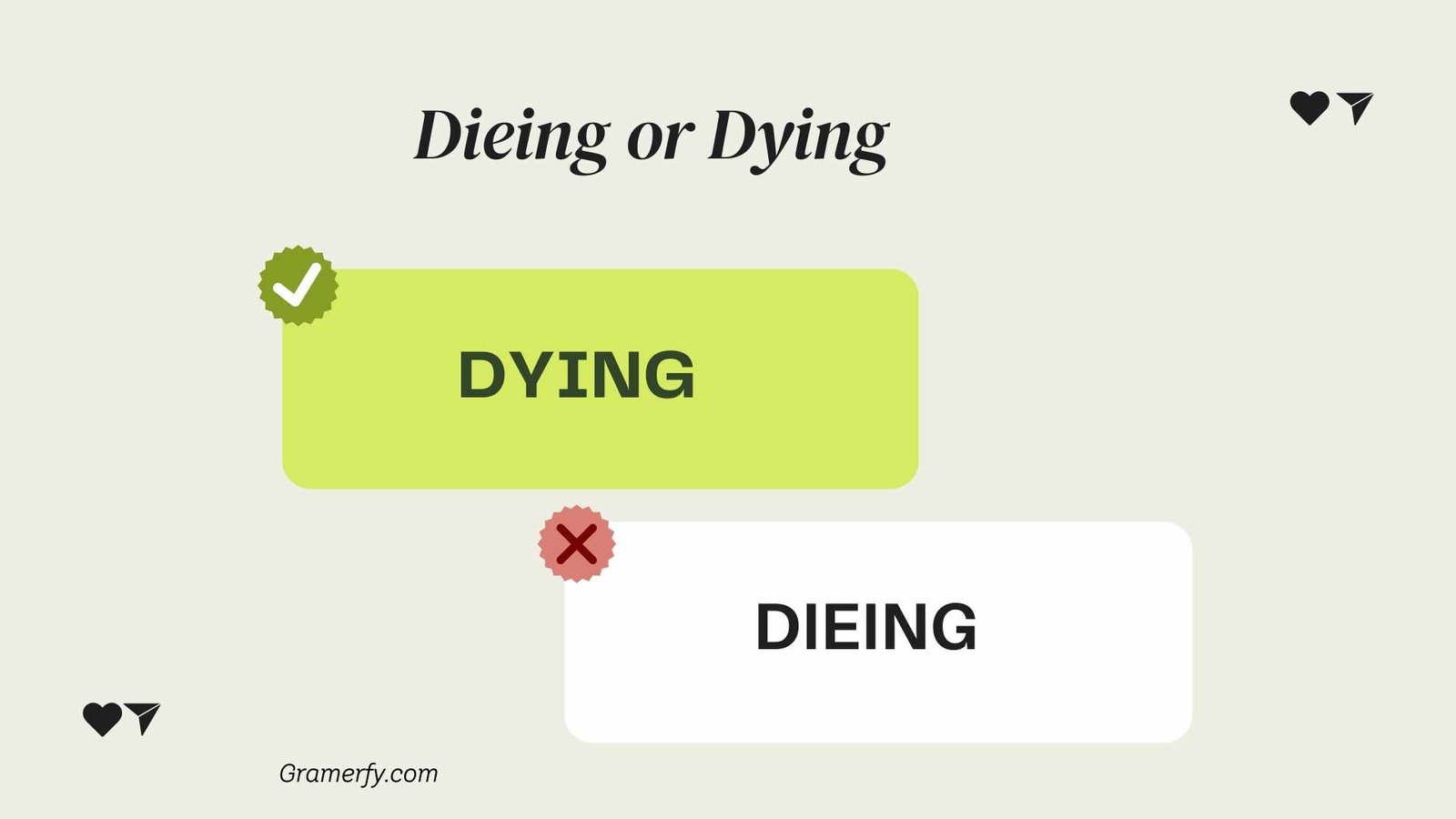
Life is full of words that sound alike but carry very different meanings, and few confuse people as much as “dieing” and “dying.”
At first glance, they may seem interchangeable, but using the wrong one can completely change the meaning of a sentence, leaving readers puzzled or even amused.
Imagine writing a heartfelt story or an important message and accidentally turning it into a grammar blunder frustrating, right?
Meaning and Usage of “Dying”
What Does “Dying” Mean?
“Dying” is the correct spelling when talking about the process of death or when something is fading or coming to an end. It is the present participle of the verb “die.”
- Example 1: The old man is dying peacefully at home.
- Example 2: The flowers are dying because they need water.
- Example 3: His enthusiasm for the project is dying slowly.
How to Use “Dying”
“Dying” is used in various contexts:
- Human or animal death:
- The patient is dying in the hospital.
- The patient is dying in the hospital.
- End of life for plants or objects:
- The plant is dying because it hasn’t been watered.
- The plant is dying because it hasn’t been watered.
- Figurative use (loss of interest, excitement, etc.):
- Her excitement was dying after hours of waiting.
- Her excitement was dying after hours of waiting.
Meaning and Usage of “Dieing”
What Does “Dieing” Mean?
“Dieing” is rarely correct in everyday English. It is actually a technical term in metalworking and printing. In these fields, “dieing” refers to cutting, shaping, or stamping material using a die.
- Example 1: The technician is dieing the metal sheets.
- Example 2: Dieing is an essential process in manufacturing.
Outside of this technical context, “dieing” is almost always a spelling mistake for “dying.”
Comparison: Dieing vs Dying
To make it crystal clear, here’s a quick comparison table:
| Word | Correct Usage | Example Sentence | Notes |
| Dying | Everyday English (death, fading, figurative) | The cat is dying of old age. | Always use when referring to death or fading. |
| Dieing | Technical/industrial (metalworking, stamping) | The worker is dieing the metal parts. | Rare; avoid in normal writing. |
Key Tip: If you’re writing about death, plants, emotions, or figurative fading, always use “dying.”
Common Mistakes with “Dying” and “Dieing”
1. Spelling Confusion
Many people write “dieing” when they mean “dying.” This is a spelling mistake unless talking about technical dieing.
- ❌ Wrong: The patient is dieing in the hospital.
- ✅ Correct: The patient is dying in the hospital.
2. Using “Dieing” in Everyday Writing
Unless you are in manufacturing, metalworking, or printing, using “dieing” will confuse readers.
3. Confusing “Dying” with “Dead”
Remember:
- Dying → in the process of death.
- Dead → has already passed away.
- Example: The soldier is dying. (still alive but near death)
- Example: The soldier is dead. (already passed away)
Spelling Tips to Remember
- Think of the verb “die.”
- “Dying” comes from die + ing → the e is dropped, just like in “lie → lying.”
- “Dying” comes from die + ing → the e is dropped, just like in “lie → lying.”
- Dieing is technical.
- If your topic is not about manufacturing or stamping, it’s almost always wrong.
- If your topic is not about manufacturing or stamping, it’s almost always wrong.
- Pronunciation hint:
- Both sound the same, so rely on spelling rules, not pronunciation.
- Both sound the same, so rely on spelling rules, not pronunciation.
Multiple Examples of “Dying” in Sentences
Everyday Life
- My grandmother is dying, and we are preparing for her farewell.
- The candle is dying down.
Nature
- The leaves are dying because of the harsh winter.
- The coral reef is dying due to pollution.
Figurative or Emotional Use
- She was dying to see the surprise gift.
- His hope was dying after repeated failures.
Multiple Examples of “Dieing” in Technical Sentences
- The factory is dieing metal sheets for automotive parts.
- Dieing is used to shape coins, jewelry, and tools.
- The technician learned dieing processes in vocational school.
FAQs (People Also Ask)
1. Is “dieing” ever correct?
Yes, but only in technical contexts like metalworking, stamping, or printing. Otherwise, it’s a spelling mistake for “dying.”
2. Which is correct: “dying” or “dieing” when talking about death?
Dying is correct in all cases related to death or fading.
3. Why do people write “dieing”?
Because it sounds the same as “dying.” English pronunciation can trick writers into misspelling.
4. How can I remember the correct spelling?
Think “die + ing” = dying. Only use “dieing” for technical die processes.
5. Can “dying” be used figuratively?
Yes! For example, dying of laughter or dying interest. It means fading or strong emotion.
Conclusion
English spelling can be tricky, especially when words sound alike. When it comes to “dying” vs “dieing,” . With this guide, you can confidently choose the right word, avoid common mistakes, and make your writing clear and professional.
Spelling mistakes like “dieing” in everyday writing can confuse readers, so sticking to “dying” will keep your communication smooth and correct.