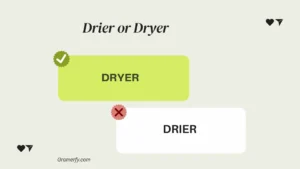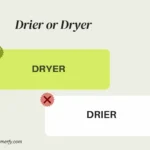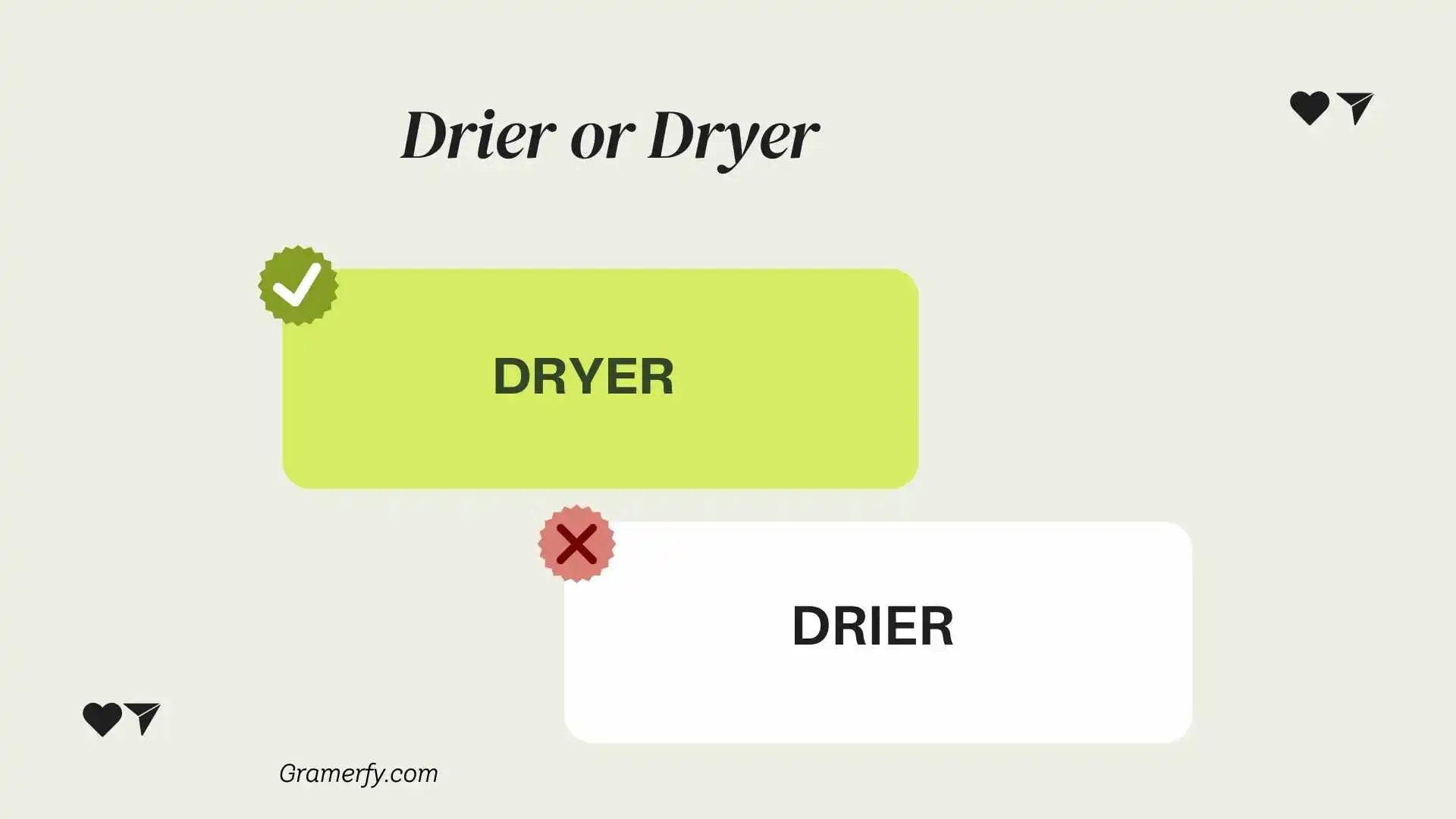
Words that look almost identical can still cause confusion. Drier or dryer is a perfect example. Many writers pause for a second when choosing between these two spellings. At first glance, they seem interchangeable.
However, each word carries a different meaning and appears in different situations. Think about everyday conversations. Someone might say the weather feels drier today. Meanwhile, another person talks about putting clothes in the dryer.
The pronunciation sounds the same, yet the function of each word changes completely. That small spelling difference can alter the entire meaning of your sentence.
What Does “Drier” Mean?
The word “drier” is the comparative form of “dry.” In simple terms, it describes something that has less moisture or is more dry than something else.
Key points about “drier”:
- It is an adjective.
- Used to compare two or more things.
- Indicates less water, humidity, or moisture.
Examples of “Drier” in Sentences
- Today is drier than yesterday; the air feels lighter.
- This towel is drier than the one I used yesterday.
- The soil in the desert is much drier than the soil near the river.
- Her hands are drier after using the moisturizer.
Notice how drier always compares one thing to another.
What Does “Dryer” Mean?
The word “dryer” is usually a noun, referring to a machine or device that removes moisture. Most often, people use it for:
- Clothes dryers (machines that dry clothes)
- Hair dryers (machines that dry hair)
Key points about “dryer”:
- It is a noun.
- Refers to a tool, appliance, or machine.
- Not used for comparing dryness.
Examples of “Dryer” in Sentences
- I put my wet clothes in the dryer after washing them.
- She used a hair dryer to style her hair quickly.
- The company sells industrial dryers for food and grains.
- Please turn off the dryer when the laundry is done.
Notice that dryer does not describe a quality—it names a device.
Drier vs. Dryer: Comparison Table
To make it simple, here’s a quick comparison:
| Feature | Drier | Dryer |
| Part of speech | Adjective | Noun |
| Meaning | More dry / less moisture | Machine or device that dries |
| Usage | Compares dryness | Names an appliance or tool |
| Example | This towel is drier than that one | I put clothes in the dryer |
This table makes it easy to remember which word to use.
Common Mistakes with “Drier” and “Dryer”
Even native speakers sometimes mix these words. Here are some frequent errors:
- Incorrect: I put my clothes in the drier.
Correct: I put my clothes in the dryer. - Incorrect: Today is more dryer than yesterday.
Correct: Today is drier than yesterday. - Incorrect: Use a drier to dry your hair.
Correct: Use a hair dryer to dry your hair.
Quick Tip to Avoid Mistakes
- If you are talking about a machine, always use dryer.
- If you are comparing how dry something is, always use drier.
Spelling Tips
Both words come from the root word “dry.” Here’s how to remember their spelling:
- Drier – Think of the i in “drier” as pointing to the adjective form of dry.
- Dryer – Think of the e as standing for equipment or engine, a device.
A simple memory trick:
i = adjective, e = equipment
Multiple Examples for Practice
Here are some more examples to help you see the difference in context:
Using “Drier”
- The desert climate is drier than the coastal area.
- After ironing, the shirt felt drier.
- This shampoo leaves my hair drier than my old one.
Using “Dryer”
- Turn off the dryer after 30 minutes.
- The factory uses a dryer to remove moisture from the beans.
- She bought a new dryer for her apartment.
Mixed Examples
- The dryer made my clothes much drier than air drying.
- A hair dryer helps my hair become drier faster.
Notice how both words can appear in one sentence, but they serve different purposes.
When to Use “Drier” vs. “Dryer” in Writing
Here are some situations to help you choose the correct word:
- Weather and climate:
- Correct: This season is drier than last year.
- Incorrect: This season is dryer than last year.
- Correct: This season is drier than last year.
- Household appliances:
- Correct: I put towels in the dryer.
- Incorrect: I put towels in the drier.
- Correct: I put towels in the dryer.
- Personal care items:
- Correct: Use a hair dryer to style your hair.
- Correct: After swimming, my hair feels drier than before.
- Correct: Use a hair dryer to style your hair.
- Food or industrial use:
- Correct: The factory uses a grain dryer.
- Correct: This bread feels drier than yesterday’s batch.
- Correct: The factory uses a grain dryer.
Common Questions About “Drier” and “Dryer” (FAQs)
1. Can I use “dryer” as an adjective?
No, dryer is a noun. Use drier when comparing dryness.
2. Is “drier” only used for weather?
No, you can use drier for anything with moisture—clothes, soil, skin, etc.
3. Are “drier” and “dryer” pronounced the same?
Yes, in most accents, both words are pronounced /ˈdraɪ.ər/, which is why they are often confused.
4. Can I write “drier clothes” after using a dryer?
Yes, that’s correct. Example: The dryer made my clothes drier than air drying.
5. Is “dryer” spelled differently in British English?
No, the spelling remains the same, but in British English, a clothes dryer may sometimes be called a tumble dryer.
Additional Tips for Beginners
- Always check the context: Is it a thing or a comparison?
- When in doubt, replace the word with “more dry” or “machine that dries” to see if it makes sense.
- Remember: drier = more dry, dryer = machine.
Practice Exercises
Try filling in the blanks with drier or dryer:
- The air in winter is much ______ than in summer.
- I put the wet towels in the ______.
- My skin feels ______ after using that soap.
- She bought a new hair ______ yesterday.
- The soil in the desert is ______ than near the lake.
Answers: 1. drier, 2. dryer, 3. drier, 4. dryer, 5. drier
These exercises help reinforce the correct usage naturally.
Fun Fact About “Drier” and “Dryer”
Did you know? In old English, “dryer” could sometimes be used as a verb meaning “one who dries,” but today, that usage is almost extinct. Modern English keeps dryer strictly as a noun for machines.
Conclusion
By using these words correctly, your writing becomes clearer, more professional, and easier to understand. Next time you talk about your clothes, weather, or appliances, you’ll know exactly which word to choose.
Remember the handy tip: i = adjective (drier), e = equipment (dryer). With practice, choosing the right word will become second nature.