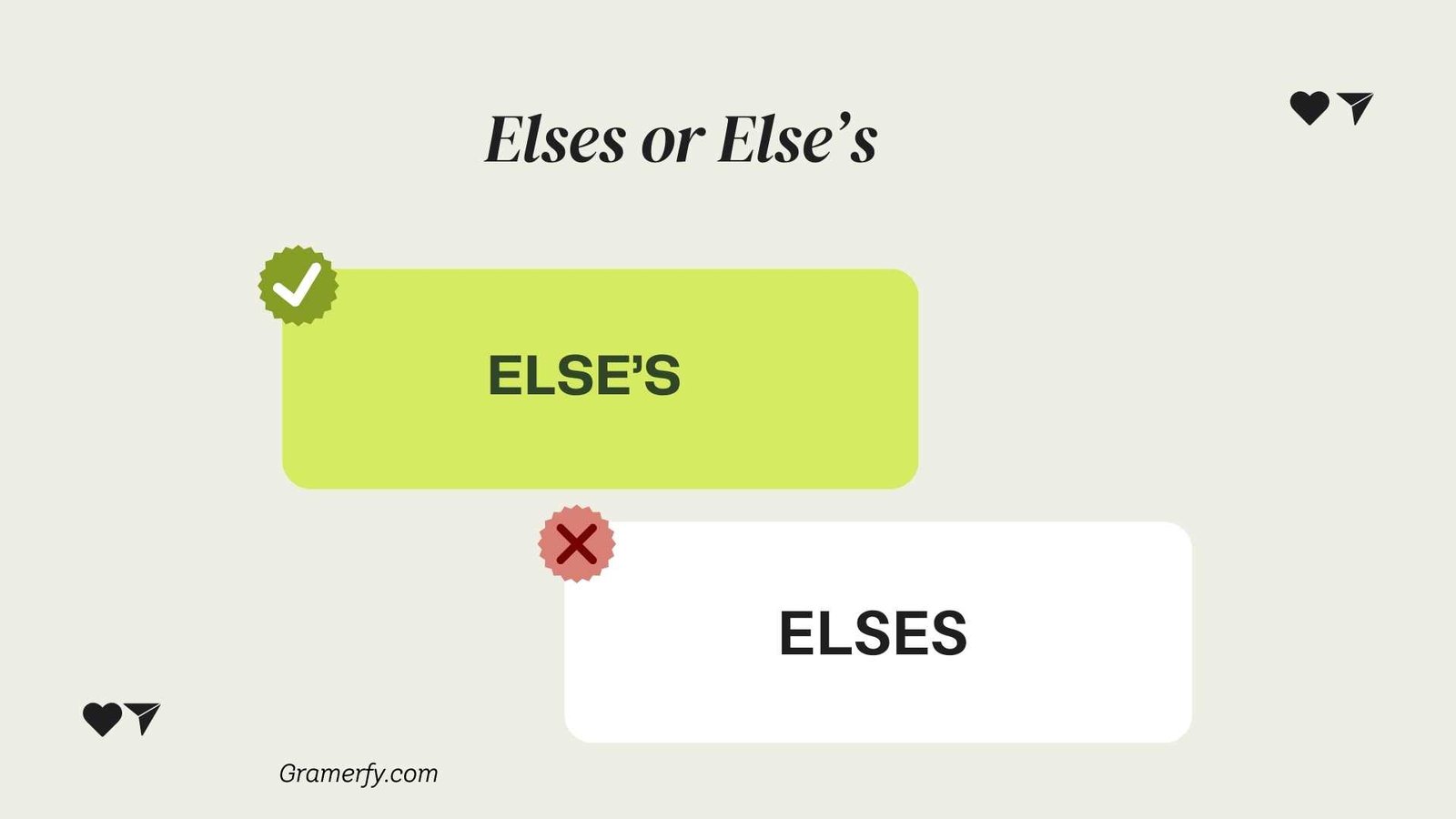
Understanding the difference between “Elses” and “Else’s” might seem like a tiny detail, but it can completely change the meaning of a sentence. Many people confuse these two because they sound almost identical when spoken, yet their usage in writing is worlds apart.
“Elses” is generally used as the plural form of “else,” while “Else’s” is a possessive, showing that something belongs to “else.”
Imagine sending a message, an email, or even writing an essay and accidentally mixing these up your reader could get confused, or worse, think it’s a grammatical mistake!
Meaning and Usage
What Does “Else” Mean?
The word else is an adverb used to refer to “other” people, things, or possibilities. It often follows words like someone, anyone, nobody, something.
Examples:
- Is there anything else I can do for you?
- Someone else will take care of it.
- Do you want to eat something else?
Understanding “Elses”
Elses is simply the plural form of else in phrases like someone elses or anyone elses, but notice: grammatically, it always needs an apostrophe when showing possession. Many people write elses incorrectly without an apostrophe.
Correct examples:
- That book is someone else’s. ✅
- I borrowed my friend’s pen and someone else’s. ✅
Understanding “Else’s”
Else’s is the possessive form of else. You use it when something belongs to “someone else” or “something else.”
Examples:
- That idea is someone else’s.
- I don’t want anyone else’s opinion right now.
- This seat is someone else’s.
Remember: Else’s = something belonging to someone else.
Elses vs Else’s: Key Differences
| Feature | Elses | Else’s |
| Meaning | Rarely used alone; mostly part of “someone else’s” | Possessive form showing ownership by “someone else” |
| Apostrophe | No apostrophe | Always has an apostrophe (‘s) |
| Usage | Plural forms in informal contexts (rare) | Standard and correct possessive usage |
| Example | Incorrect: “I want someone elses book.” ❌ | Correct: “I want someone else’s book.” ✅ |
Tip: Most of the time, if you want to show ownership, use else’s. Using elses without an apostrophe is almost always wrong.
Common Mistakes
1. Forgetting the Apostrophe
- Incorrect: Is this bag someone elses? ❌
- Correct: Is this bag someone else’s? ✅
2. Confusing with “else”
- Incorrect: I don’t need someone elses help. ❌
- Correct: I don’t need someone else’s help. ✅
3. Using “elses” alone
- Incorrect: Can I talk to elses? ❌
- Correct: Can I talk to someone else? ✅
Rule of thumb: If it’s possessive, always use else’s with an apostrophe.
Spelling Tips
- Remember the apostrophe: Possessive always needs ’s → else’s.
- Think of ownership: If it belongs to another person, it’s else’s.
- Avoid pluralizing “else” alone: “Elses” without context is almost always wrong.
Multiple Examples in Context
Everyday Sentences
- I borrowed someone else’s phone yesterday.
- Please don’t use anyone else’s laptop.
- That solution seems like someone else’s idea.
Questions
- Is this pen someone else’s?
- Can I take anyone else’s help if needed?
Negatives
- I don’t want anyone else’s mistakes to affect me.
- No one should use someone else’s account without permission.
Comparisons with “Else”
- Someone else will fix the issue. (refers to another person)
- That bag is someone else’s. (shows possession)
Notice how else and else’s serve completely different purposes.
FAQs (People Also Ask)
1. Can I write “elses” instead of “else’s”?
No. Writing elses without an apostrophe is grammatically incorrect when showing possession. Always use else’s.
2. Is “someone elses” correct?
No. Correct form is someone else’s. Always add the apostrophe to show possession.
3. Can “else” be plural?
No. “Else” is not a noun, so it cannot be plural on its own. It works only with words like someone else or something else.
4. How do I know when to use “else’s”?
Use else’s when you want to show that something belongs to someone else. Think of it as a standard possessive.
5. Are there exceptions to these rules?
Very few. In almost all modern English writing, else’s with an apostrophe is correct for possession.
Quick Tips to Avoid Mistakes
- If you can replace it with “someone else’s,” you likely need else’s.
- Don’t try to make “else” plural; it usually leads to errors.
- Proofread for apostrophes, especially in formal writing.
- Remember: else = another person or thing, else’s = possession.
Conclusion
Understanding the difference between elses and else’s is simple once you know the rules. Most mistakes come from forgetting the apostrophe.
Mastering this small but important detail will make your English more polished and professional.