In today’s fast-paced world, we often come across the terms “Flakey” or “Flaky”, but do we really understand what they mean?
It’s a person who constantly cancels plans or a situation that never seems reliable, being flakey has become a common part of our modern vocabulary.
The word carries a unique mix of lighthearted humor and subtle frustration because while we laugh at someone’s unpredictable behavior, deep down, it can test our patience. From relationships to professional settings, recognizing flakiness is more important than ever.
Meaning of Flaky
The word flaky is an adjective used to describe something that has thin pieces that can break off easily or a person who is unreliable.
1. Physical Meaning
- Flaky pastry – A pastry that breaks into small, thin layers easily.
- Flaky skin – Skin that peels or sheds in small pieces.
2. Figurative Meaning
- Unreliable person – Someone who doesn’t keep promises or often cancels plans.
Examples:
- I love this flaky croissant; it melts in my mouth.
- Be careful with him; he’s kind of flaky.
What About Flakey?
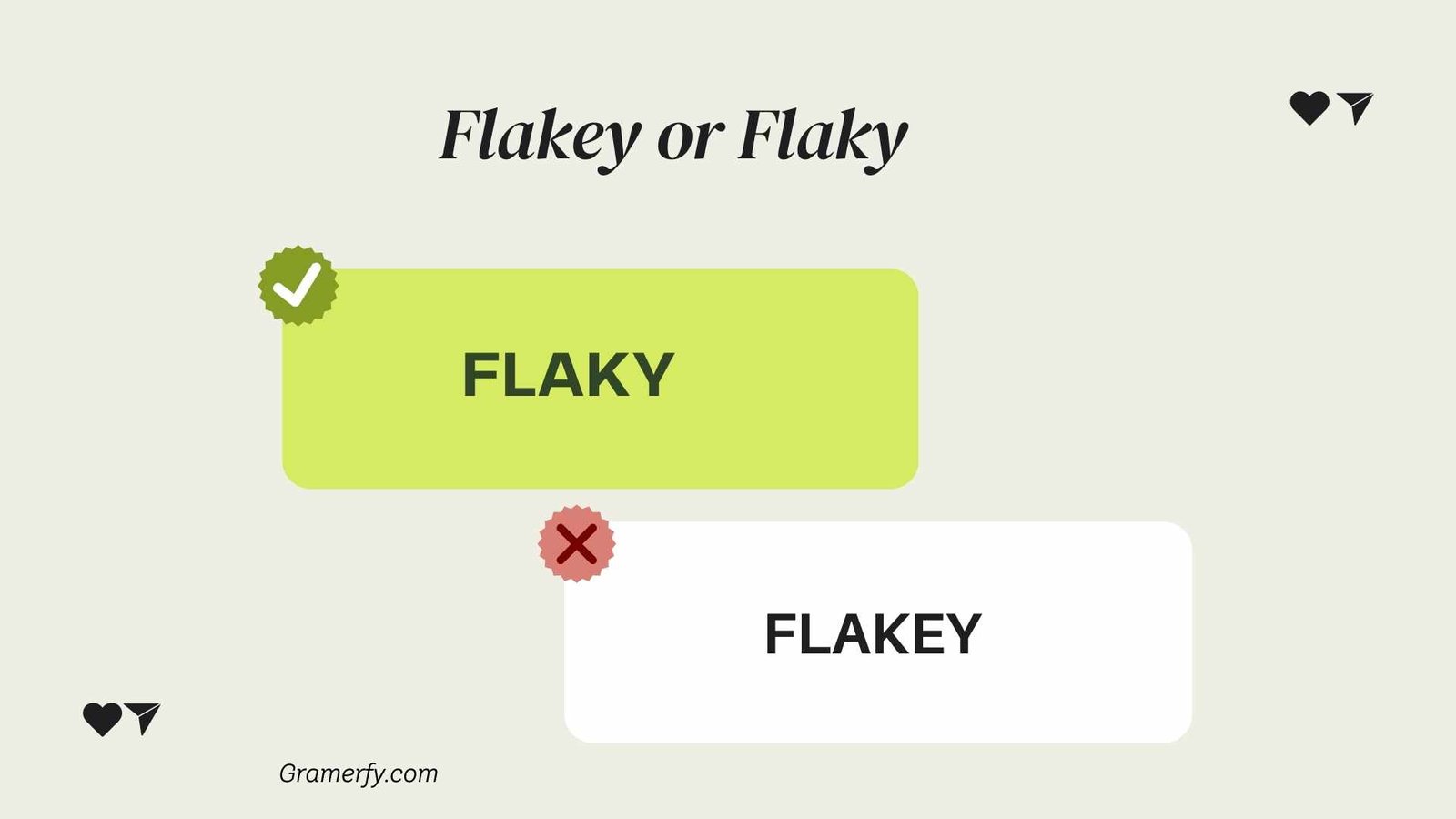
Flakey is an alternative spelling, but it is less common and often considered incorrect in formal English. Most dictionaries, including Merriam-Webster and Oxford, prefer flaky.
Example:
- Incorrect: I baked a flakey pie.
- Correct: I baked a flaky pie.
Even though some informal writers use flakey, using flaky is safer, especially in professional or academic writing.
Comparison Table: Flakey vs Flaky
| Feature | Flaky | Flakey |
| Standard Usage | ✅ Preferred spelling | ⚠ Rare, informal |
| Dictionary Support | ✅ Yes | ❌ Limited |
| Usage in Writing | ✅ Formal & informal | ⚠ Mostly informal or casual |
| Correctness | ✅ Correct | ⚠ Often considered wrong |
| Common Context | Describing food, skin, or unreliable people | Same meaning, less accepted |
Takeaway: Always use flaky to be safe.
Correct Usage in Sentences
Here are examples showing how to use flaky correctly in different contexts:
Physical Context (Food & Objects)
- The pie crust is so flaky, it melts in your mouth.
- Be careful with that paint; it’s flaky and may peel off.
Figurative Context (Personality)
- Don’t rely on him; he’s a little flaky.
- She seemed nice, but her flaky behavior made it hard to trust her.
Describing Skin or Surface
- Winter made my lips flaky and dry.
- The old paint on the wall was flaky and needed scraping.
Common Mistakes & Spelling Tips
Mistake 1: Using Flakey
- Wrong: My pastry is so flakey.
- Right: My pastry is so flaky.
Mistake 2: Confusing with “Fakey”
- Fakey means fake or not genuine, which is completely different from flaky.
Tip: Remember that flaky has only one “e” after the “k.” If you write it as flakey, it may look like a misspelling.
Quick Spelling Tip
- Flaky → Correct
- Flakey → Avoid
Think: “The layers are krispy (k in flaky)” to remember the correct spelling.
Examples for Practice
Here are 10 example sentences to help you master flaky:
- The croissant was flaky and buttery.
- I don’t like people who are too flaky.
- Her skin became flaky in the cold weather.
- He has a flaky reputation at work.
- The old paint on the fence was flaky.
- I need a flaky pie crust for this recipe.
- She apologized for being flaky last night.
- Winter can make your scalp dry and flaky.
- Don’t be flaky about our plans.
- The flaky chocolate dessert was amazing.
FAQs (People Also Ask)
1. Is it flakey or flaky?
Answer: The correct spelling is flaky. “Flakey” is less common and not recommended in formal writing.
2. Can flakey be used informally?
Answer: Yes, some people use it informally, but it is safer and standard to use flaky.
3. What does flaky mean in slang?
Answer: In slang, flaky describes someone who is unreliable or forgetful.
4. How do you remember the spelling of flaky?
Answer: Remember: flaky = k + y. Think of “krispy layers” in pastry.
5. Are flaky and fakey the same?
Answer: No. Flaky describes something thin, breaking apart, or unreliable. Fakey means fake or not real.
Conclusion
In English, flaky is the correct and widely accepted spelling. While you may occasionally see flakey, it is not standard and may be marked as incorrect in formal writing.
Whether you are describing food, skin, paint, or even a person’s behavior, flaky is versatile and easy to use once you remember its proper spelling. By avoiding common mistakes and practicing with examples, you can confidently use flaky in all your writing.