A simple “Good Night” or “Goodnight” carries more magic than we often realize. It’s not just a phrase it’s a gesture that wraps up the day with warmth, love, and care.
Whispered to a loved one, sent as a sweet text, or shared on social media, it instantly creates a sense of connection and comfort.
People search for perfect ways to say goodnight because it’s more than words; it’s an emotion, a promise of peace, and a tiny moment of happiness before sleep.
Meaning of “Good Night”
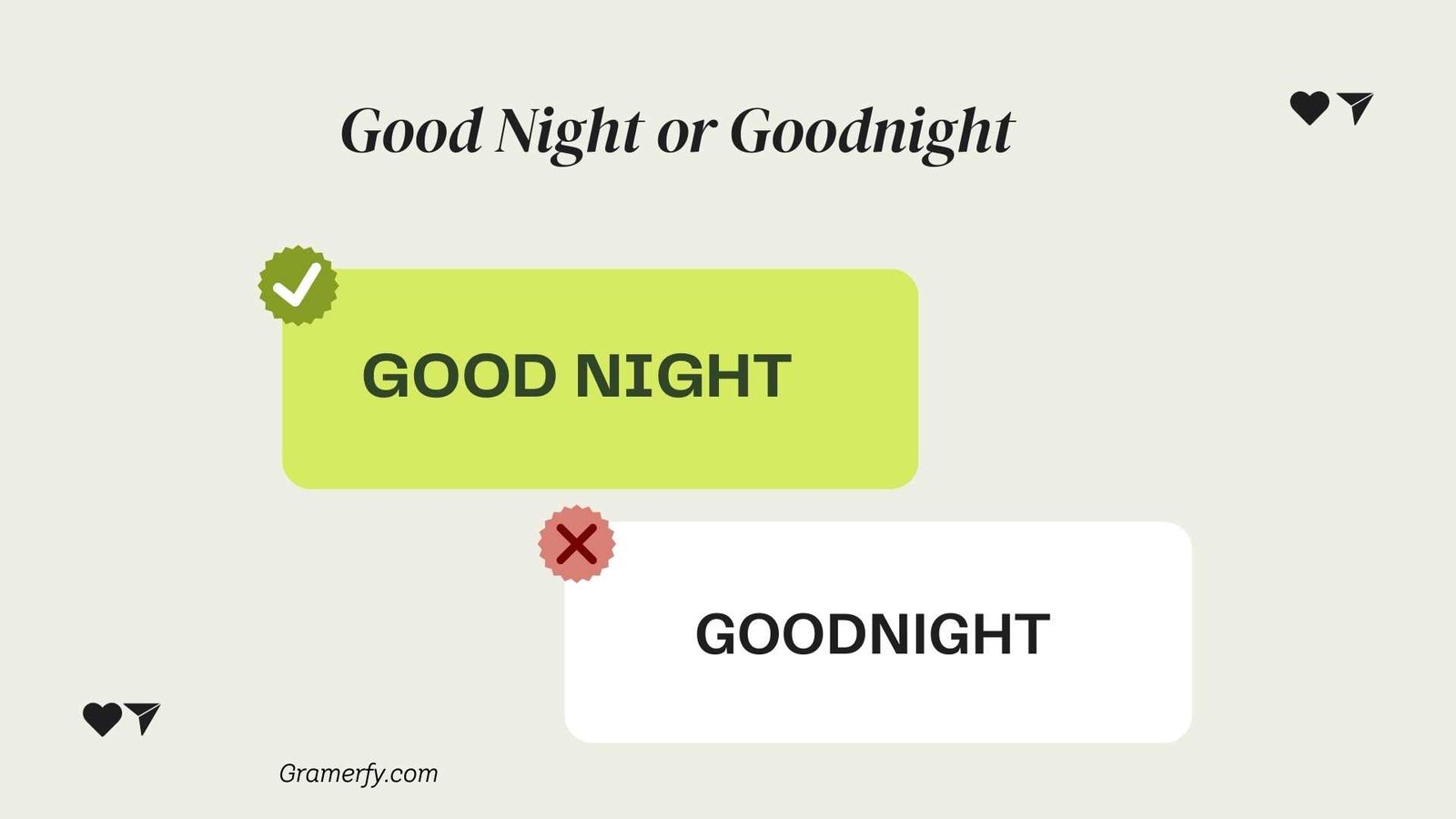
“Good night” is a polite phrase used when wishing someone a pleasant night before they go to sleep. It is always written as two separate words in formal writing and everyday communication.
- Usage: Saying goodbye in the evening or night.
- Tone: Friendly, polite, caring.
Examples:
- “Good night, sleep well!”
- “I’ll call you tomorrow. Good night!”
- “Good night, everyone. See you in the morning.”
Remember: “Good night” is almost always used as a greeting or farewell in the evening or at bedtime.
Meaning of “Goodnight”
“Goodnight” is the compound form of “good night.” It is less formal and often seen in informal writing, texts, and literature, such as in books or messages. It can function as:
- A farewell expression: “Goodnight, dear.”
- An adverb (rarely): Used poetically, e.g., “He whispered goodnight and left.”
Examples:
- “Goodnight! Don’t let the bedbugs bite.”
- “She waved and said goodnight before leaving.”
Tip: In modern English, both forms are widely understood, but “good night” (two words) is considered standard in formal writing.
Comparison: Good Night vs Goodnight
| Feature | Good Night | Goodnight |
| Spelling | Two words | One word |
| Formality | Formal / Standard | Informal / Casual |
| Common Usage | Greetings, farewells, letters | Texts, casual conversation, literature |
| Part of Speech | Phrase / Interjection | Phrase / Interjection |
| Example | “Good night, see you tomorrow.” | “Goodnight! Sleep tight.” |
Key Point: If you are writing a formal letter, email, or academic text, always use good night. In texting, chatting, or informal notes, goodnight is acceptable.
Common Mistakes & Spelling Tips
Even native speakers sometimes confuse these forms. Here are the common mistakes and tips to avoid them:
1. Using goodnight in formal writing
❌ Incorrect: “Goodnight, Sir, I will submit the report tomorrow.”
✅ Correct: “Good night, Sir. I will submit the report tomorrow.”
2. Forgetting to capitalize in greetings
❌ Incorrect: “good night everyone”
✅ Correct: “Good night, everyone.”
3. Mixing goodnight with other phrases
❌ Incorrect: “Goodnight and have a good night.” (awkward repetition)
✅ Correct: “Good night, and have sweet dreams.”
4. Mispronouncing the phrase in speech
- Both “good night” and “goodnight” are pronounced the same: /ɡʊd ˈnaɪt/
- Tip: Focus on context rather than pronunciation.
How to Use Good Night and Goodnight in Sentences
Examples with Good Night
- “Good night, Mom. I’ll see you in the morning.”
- “It’s getting late. Good night, everyone!”
- “Good night, and don’t forget to lock the doors.”
Examples with Goodnight
- “Goodnight! Text me when you wake up.”
- “She whispered goodnight and turned off the lights.”
- “Goodnight, my love. Sweet dreams.”
Quick Tip: When writing stories, novels, or dialogues, goodnight is often preferred for natural flow.
FAQs (People Also Ask)
1. Is “goodnight” one word correct?
Yes, it is correct in informal contexts, texting, or literary writing. For formal writing, “good night” (two words) is standard.
2. Can I use “good night” during the day?
No, “good night” is specifically for the evening or bedtime. Use greetings like “hello” or “good afternoon” during the day.
3. Which is more common: good night or goodnight?
In formal writing, “good night” is more common. In texts and casual chats, “goodnight” is often used.
4. Do I need a comma after “good night”?
Yes, if it is followed by a person’s name or phrase:
- “Good night, Sarah.”
- “Good night, everyone!”
5. Can “goodnight” start a sentence?
Yes, it can, especially in informal writing:
- “Goodnight! I’ll see you tomorrow.”
Tips to Remember
- Two words = formal, polite, standard.
- One word = informal, casual, or literary.
- Always capitalize the first letter in greetings.
- Use commas when addressing someone directly: “Good night, John.”
- Avoid repeating “good night” unnecessarily in the same sentence.
Conclusion
In English, both “good night” and “goodnight” are correct, but their usage depends on the context. Good night is preferred in formal writing and professional communication, while goodnight works perfectly in casual messages, texts, and literary settings.
Understanding the difference ensures your messages sound natural, polite, and grammatically correct. With these examples, tips, and FAQs, you can confidently say good night or goodnight without second-guessing.