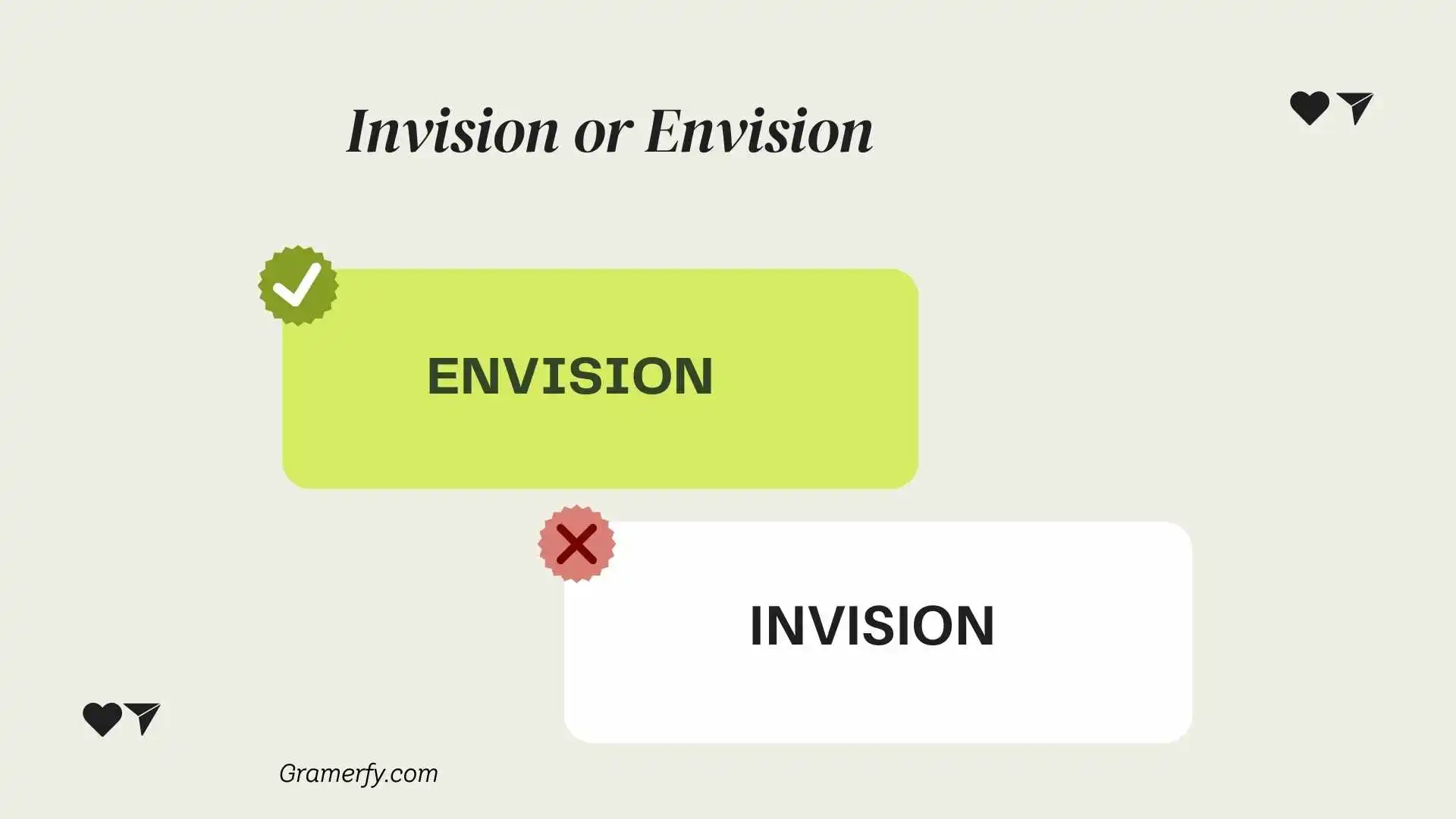
In a world driven by ideas, Invision or Envision is where imagination meets reality. These powerful platforms are designed to transform your concepts into visually stunning, interactive experiences that captivate users instantly.
You’re a designer, developer, or entrepreneur, Invision or Envision empowers you to prototype, collaborate, and iterate faster than ever before, making creativity not just a process but an exhilarating journey.
With intuitive interfaces, seamless collaboration tools, and smart features, you can bring ideas to life in ways that feel effortless and inspiring. Imagine crafting user experiences that don’t just work they resonate, engage, and leave a lasting impression.
What Does “Envision” Mean?
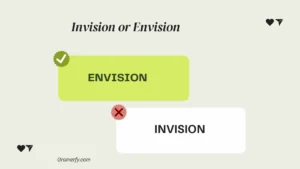
Envision is a real and widely accepted English word. It means to imagine, picture, or visualize something in your mind before it happens.
Key Points About “Envision”
- Part of speech: verb
- Common usage: Refers to imagining something in the future
- Tone: Professional, creative, and forward-thinking
Examples of “Envision” in Sentences:
- She can envision a future where renewable energy powers every home.
- I envision my career growing in an international company.
- They envisioned a world without poverty.
✅ Tip: Use “envision” when talking about ideas, goals, or plans that are not yet real.
What About “Invision”?
Unlike “envision,” “Invision” is not traditionally recognized in standard English dictionaries as a verb. It is mostly seen as:
- A brand or product name (like InvisionApp, a design collaboration tool).
- A typo or mistaken spelling of “envision.”
Example of Brand Usage:
- “We use Invision to design interactive prototypes for our app.”
- “The team shared feedback on the project using Invision.”
❌ Important: Do not use “Invision” as a verb meaning “to imagine.” That’s incorrect.
Envision vs Invision: Quick Comparison Table
| Feature | Envision | Invision |
| Type | Standard English verb | Brand name / product |
| Meaning | To imagine or visualize | No meaning in standard English |
| Correct Usage | “I envision a bright future.” | “We collaborate using Invision.” |
| Common Mistake | Confusing it with “invision” | Using as a verb meaning “imagine” |
| Audience Appropriateness | Professional & casual writing | Only when referring to the brand |
Common Mistakes People Make
- Using “Invision” instead of “Envision”
- ❌ Incorrect: I can invision our next marketing campaign.
- ✅ Correct: I can envision our next marketing campaign.
- ❌ Incorrect: I can invision our next marketing campaign.
- Confusing brand name with verb
- ❌ Incorrect: Please invision your goals clearly.
- ✅ Correct: Please envision your goals clearly.
- ❌ Incorrect: Please invision your goals clearly.
- Spelling variations
- Remember: “Envision” always starts with E, never I, unless it’s the brand.
- Remember: “Envision” always starts with E, never I, unless it’s the brand.
How to Remember the Difference
- Envision → E for Imagine / Explore
- Invision → I for Identity / Internet brand
Multiple Examples for Clarity
Envision in Business
- The CEO envisions a future with sustainable offices worldwide.
- We must envision our customer’s journey to improve service.
Envision in Personal Life
- I envision traveling to Europe next summer.
- She envisions writing a book one day.
Invision as a Brand
- Designers collaborate on prototypes using Invision.
- The project team shared mockups via Invision.
Spelling Tips
- Envision → Starts with E. Think “E” for Eye (seeing in your mind).
- Invision → Starts with I. Mostly used for brand or proper nouns.
💡 Quick Trick: If you are trying to imagine something, always go with Envision.
FAQs (People Also Ask)
1. Can I use “Invision” instead of “Envision”?
No. “Invision” is mostly a brand name. Use envision to mean imagining something.
2. Is “Envision” formal or informal?
It works in both formal and informal contexts. Professionals often use it in business or goal-setting scenarios.
3. What is the past tense of “envision”?
The past tense is envisioned. Example: She envisioned a better future for her community.
4. Are “envision” and “imagine” the same?
Almost, but envision usually implies a more structured or goal-oriented imagination, while imagine is broader.
5. Can “Invision” ever be correct in writing?
Yes, only if referring to the brand, company, or product name. Otherwise, it’s incorrect.
6. How do I pronounce “envision”?
It’s pronounced: /ɛnˈvɪʒən/ → en-VIZH-uhn
Tips for Using “Envision” Like a Pro
- Pair with future-oriented goals: “I envision a world…”
- Use in professional writing for clarity and sophistication.
- Combine with action verbs: envision + achieve / create / design.
Example:
- She envisions creating a positive impact through her work.
- The team envisions launching the app by next year.
Conclusion
Always double-check your writing. If your goal is to express imagination or planning, use envision. Misusing “invision” is a common mistake but easy to avoid. By remembering these tips, examples, and differences, you’ll never confuse them again.
Clear, precise, and correct use of language boosts your credibility, especially in professional or academic writing. So, next time you plan, dream, or imagine, envision your words carefully!