When it comes to communication, marketing, or even everyday products, the difference between labelling and labeling might seem small but it can make a world of difference.
Have you ever wondered why some brands grab your attention instantly while others barely register? The secret often lies in the labels not just the words, but the perception they create.
Labelling isn’t merely about sticking a name on something; it’s about identity, clarity, and trust. On the other hand, labeling, especially in the American context, reflects the same idea with a different spelling, showing how language evolves across regions.
Meaning of Labelling
Labelling is the process of putting a label or identifying mark on something. It’s commonly used in contexts like packaging, product identification, categorization, or even metaphorically when describing people or ideas.
Examples:
- The store was busy labelling all the new products.
- Teachers should avoid labelling students as “lazy” or “smart.”
- Proper labelling of chemicals is essential for safety in laboratories.
Notice that labelling is often spelled with a double “l” in British English.
Meaning of Labeling
Labeling is simply the American English spelling of labelling. It has the exact same meaning and usage but follows U.S. English conventions.
Examples:
- The company is labeling its products according to FDA rules.
- Avoid labeling people based on first impressions.
- Accurate labeling of food items helps consumers make better choices.
Labelling vs Labeling: Key Differences
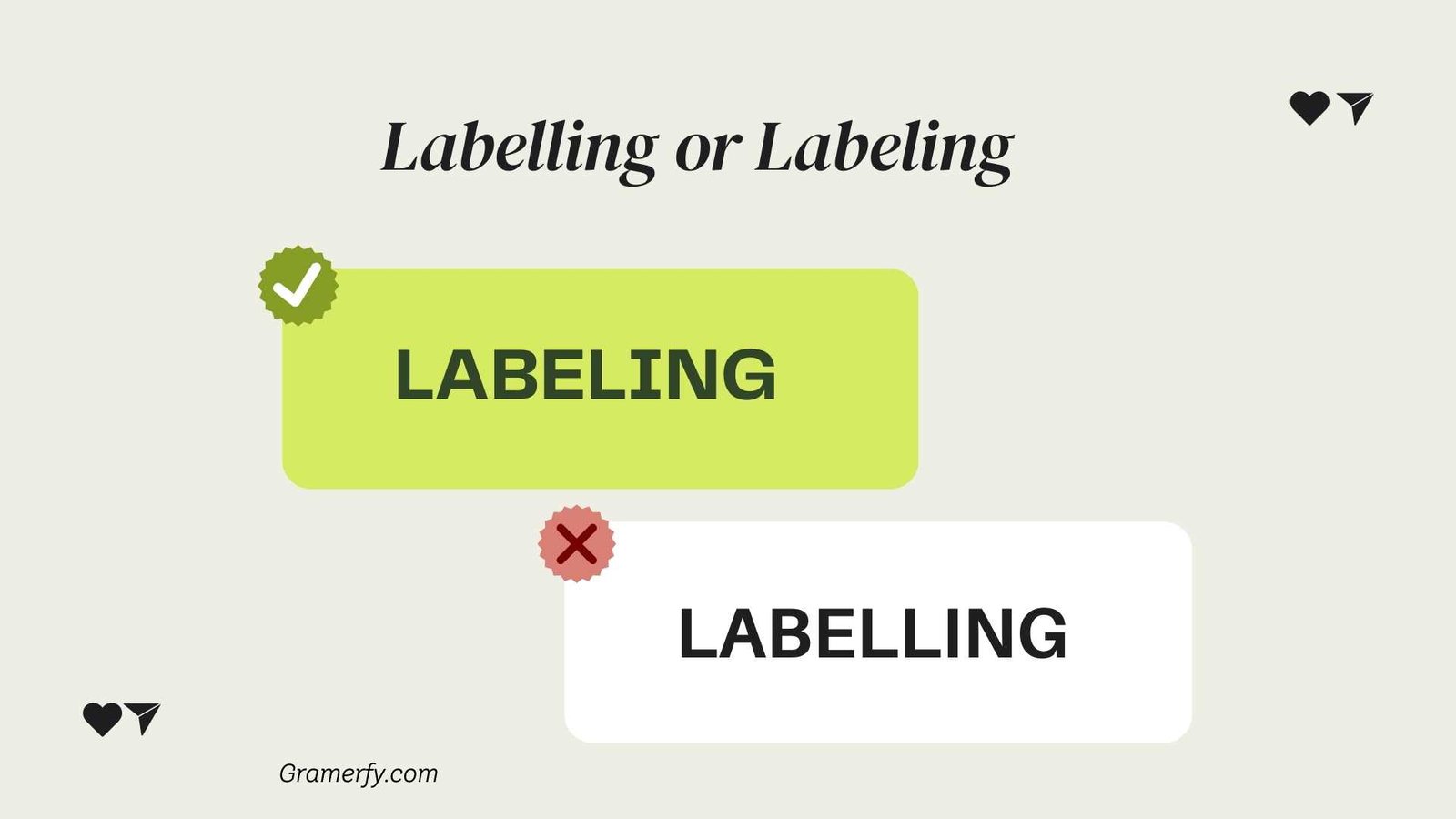
The difference between labelling and labeling is purely regional. There is no difference in meaning, only in spelling.
| Feature | Labelling | Labeling |
| English Type | British English | American English |
| Usage | UK, Australia, Canada | USA |
| Double L | Yes (labelling) | No (labeling) |
| Meaning | Same as labeling | Same as labelling |
| Example | She is labelling the jars carefully. | She is labeling the jars carefully. |
When to Use Labelling or Labeling
- Use labelling if you are writing in British, Australian, or Canadian English.
- Use labeling if you are writing in American English.
Quick Tip: If your audience is international, either spelling is usually acceptable, but choose one style and stay consistent.
Common Mistakes with Labelling and Labeling
Many people confuse these words, leading to minor errors in writing. Here are the most common mistakes:
- Mixing British and American spellings
- ❌ “The company is labelling its products in the USA.”
- ✅ “The company is labeling its products in the USA.”
- ❌ “The company is labelling its products in the USA.”
- Dropping the double “l” in British English
- ❌ “Labelling is important for safety.” (UK)
- ✅ “Labelling is important for safety.” (UK)
- ❌ “Labelling is important for safety.” (UK)
- Confusing the word with “label” (noun)
- “I am putting a label on the jar.” (correct)
- “I am labelling/labeling the jar.” (correct as a verb)
- “I am putting a label on the jar.” (correct)
- Using “labelling” as a noun incorrectly
- ❌ “Labelling are required for all items.”
- ✅ “Labeling is required for all items.”
- ❌ “Labelling are required for all items.”
Spelling Tips for Labelling/Labeling
- Rule 1: If using British English, double the “l” when adding endings like -ing → labelling, labelled, labeller.
- Rule 2: In American English, do not double the “l” → labeling, labeled, labeler.
- Rule 3: Always check your audience to maintain consistency in spelling.
Examples of Correct Usage
Labelling (British English)
- She is labelling all the files in alphabetical order.
- Proper labelling of allergens is required by law.
- The teacher avoided labelling students with negative terms.
Labeling (American English)
- He is labeling the boxes for shipment.
- Food labeling is strictly controlled in the United States.
- Avoid labeling people unfairly based on stereotypes.
Sentences Showing Both Forms
- UK: The factory is labelling its products carefully.
- US: The factory is labeling its products carefully.
Labelling vs Labeling in Different Contexts
1. Business and Packaging
- Labelling (UK): The chocolate bars are labelling in bold letters.
- Labeling (US): The chocolate bars are labeling in bold letters.
2. Academic or Social Context
- Labelling (UK): Students should not be labelling their peers negatively.
- Labeling (US): Students should not be labeling their peers negatively.
3. Safety Instructions
- Labelling (UK): Proper labelling of chemicals is required.
- Labeling (US): Proper labeling of chemicals is required.
FAQs (People Also Ask)
Q1: Is labelling correct or labeling correct?
- Both are correct. Labelling is British English, and labeling is American English.
Q2: How do you spell labelling in American English?
- In American English, it is spelled labeling with a single “l.”
Q3: Should I double the “l” in labelling?
- Only if you are using British English. American English uses a single “l.”
Q4: Can I use labeling in UK writing?
- While understood, it’s best to stick with labelling in British English for consistency.
Q5: Are labelling and labeling interchangeable?
- Yes, they have the same meaning. Just choose the correct spelling for your audience.
Tips to Remember Labelling vs Labeling
- Think regionally: UK → labelling, US → labeling.
- Consistency is key: Don’t switch styles mid-text.
- Verb vs noun: Labelling/labeling is usually a verb; label is the noun.
- Check software: Spell-checkers in Word or Google Docs usually follow your language setting.
Conclusion
Understanding labelling vs labeling is simple once you know the rules: it’s all about British vs American English. Both spellings are correct, both mean the same thing, and both are widely understood. The key is consistency.
By mastering this small spelling difference, you’ll make your writing look professional and polished, whether for school, work, or online content.