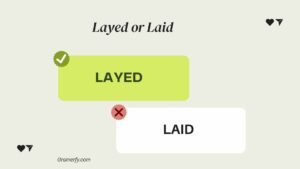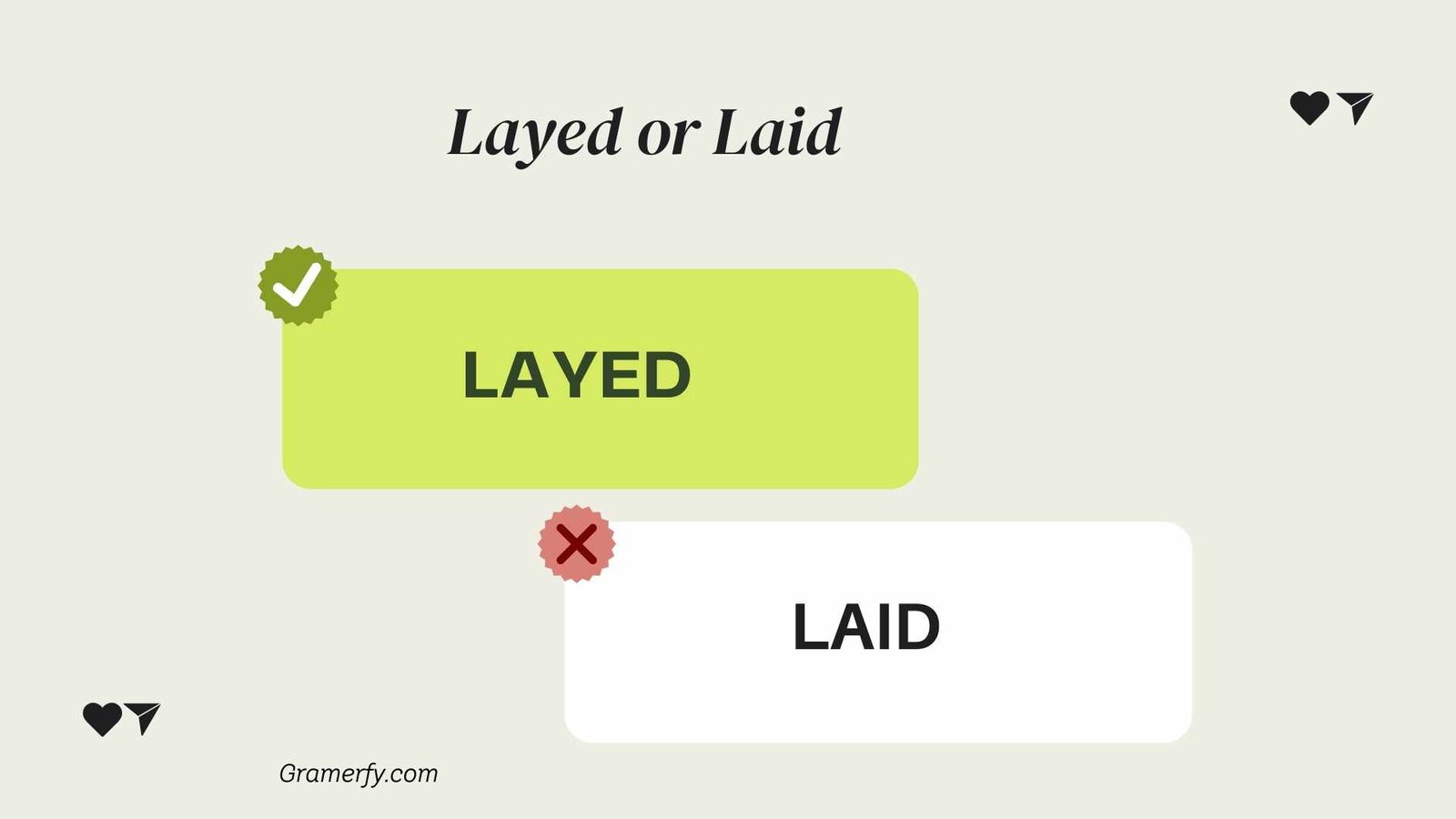
Have you ever typed “I layed down” and suddenly felt unsure? You’re not alone. The confusion between Layed or Laid trips up students, bloggers, and even native English speakers every single day.
One tiny letter can change everything. And yes, search engines notice.Here’s the truth: “layed” looks right, sounds right, and feels right.
However, it’s almost always wrong. The correct word is usually “laid.” But why? What makes “laid” correct while “layed” raises red flags in grammar checkers?
What Does “Laid” Mean?
Laid is the correct past tense and past participle of the verb “lay”, which means to put something down in a flat position.
Key points about “laid”:
- It is always spelled laid, never layed.
- It is used when referring to placing objects, not people or oneself.
Examples:
- She laid the book on the table.
- I laid the blanket on the bed before guests arrived.
- The workers laid new tiles in the kitchen.
Why “Layed” is Incorrect
“Layed” is a common spelling mistake. It is not recognized in standard English grammar. People sometimes use it because they try to form the past tense of “lay” as they would with regular verbs (like play → played).
Remember: Always use laid in the past tense.
Comparing “Lay” and “Lie”
Another source of confusion is mixing lay with lie. Here’s a simple breakdown:
| Verb | Present | Past | Past Participle | Meaning |
| Lay | lay | laid | laid | To put something down (requires an object) |
| Lie | lie | lay | lain | To recline or be in a flat position (no object) |
Examples:
- Lay: I laid the keys on the counter.
- Lie: Yesterday, I lay on the sofa all afternoon.
Notice how “lie” becomes “lay” in the past tense—that’s why people confuse layed with laid.
Correct Usage of “Laid” in Sentences
Here are different ways to use laid correctly:
- Placing objects:
- He laid the plates on the dining table.
- She carefully laid the baby in the crib.
- He laid the plates on the dining table.
- Figurative usage:
- The company laid the foundation for future success.
- They laid out a plan for the project.
- The company laid the foundation for future success.
- Past participle in perfect tense:
- I have laid the documents on your desk.
- She had already laid the papers before I arrived.
- I have laid the documents on your desk.
Common Mistakes with “Laid”
- Using layed instead of laid.
- Confusing lay (requires object) with lie (no object).
- Incorrect tense usage: “I layed the book” is wrong; it should be “I laid the book.”
Tip: Ask yourself—Am I putting something down? If yes, use laid.
Spelling Tips to Avoid Mistakes
- Remember the past tense: Lay → Laid (like “paid” not “payed”)
- Avoid adding extra “e”: “layed” is always wrong.
- Think of objects: If there is a direct object, you need laid.
Examples to Practice
- I laid my phone on the desk this morning.
- The gardener laid the soil evenly in the flower bed.
- Yesterday, I laid out all my clothes for the trip.
- She has laid down the rules for everyone to follow.
FAQs (People Also Ask)
Q1: Can I ever use “layed”?
No, “layed” is always incorrect. The proper past tense is laid.
Q2: Is “laid” only used for objects?
Mostly, yes. “Laid” is for putting something down. For reclining yourself, use lie → lay → lain.
Q3: How do I remember the difference between lay and lie?
Think:
- Lay = place something (object needed).
- Lie = recline (no object).
Q4: Can “laid” be used figuratively?
Yes! Example: “The CEO laid the groundwork for the new strategy.”
Q5: What is the easiest trick to avoid “layed”?
If you can replace it with placed in your sentence, then laid is correct.
Quick Reference Table
| Mistake | Correct | Example |
| layed | laid | I laid the keys on the table. |
| layed | laid | She laid the baby in the crib. |
| layed | laid | They laid the foundation for success. |
Summary
In the end, understanding the difference between “layed” and “laid” is simple once you know the rule. “Layed” is not a correct spelling in standard English, while “laid” is the proper past tense of “lay,” which means to put or place something down. For example, you laid your phone on the table yesterday.
Many people confuse it with “lied,” the past tense of “lie,” but the meanings are different. When you remember that “lay” needs an object and becomes “laid” in the past, you’ll avoid common mistakes. Master this small detail, and your writing will instantly sound clearer and more professional.