Have you ever caught someone lying to you… or maybe caught yourself doing it? Lying is something almost everyone experiences, yet it remains one of the most fascinating and complicated parts of human behavior.
A single lie can protect feelings, avoid trouble, or sometimes create a chain of problems that grows bigger with time. From small “white lies” we tell every day to serious deception that can break trust, lying shapes relationships, decisions, and even our view of reality.
But why do people lie in the first place? Is it fear, selfishness, survival, or simply habit? And more importantly, how can we recognize when someone is not telling the truth?
What Does “Lying” Mean?
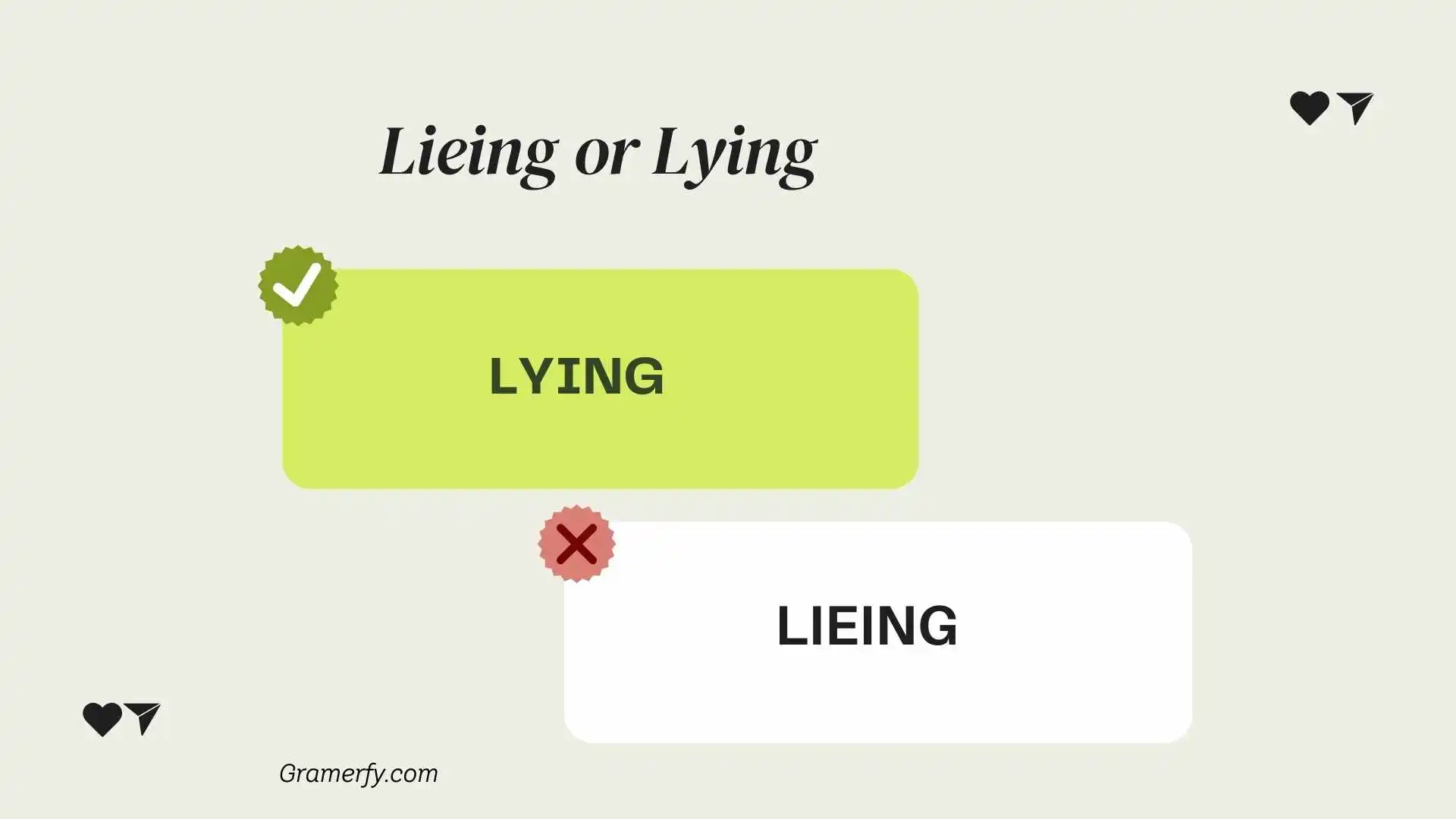
The word “lying” is the correct spelling in English. It is the present participle of the verb “lie.”
Lie has two main meanings:
- To recline or be in a horizontal position.
- Example: I am lying on the couch, reading a book.
- Example: I am lying on the couch, reading a book.
- To tell an untruth.
- Example: He is lying about his age.
- Example: He is lying about his age.
Key point: “Lying” is always the right form. English never uses “lieing.”
Why “Lieing” is Incorrect
Many learners write “lieing” because they think adding -ing to lie requires keeping the e.
However, English has a spelling rule: when a verb ends with -ie, change -ie to -y before adding -ing.
- Correct: die → dying, lie → lying
- Incorrect: dieing, lieing
This rule helps your writing look professional and error-free.
Lie vs. Lay: A Quick Reminder
Sometimes, confusion with lie comes from mixing it up with lay.
| Verb | Meaning | Present Tense | Past Tense | Past Participle |
| Lie | Recline | lie | lay | lain |
| Lay | Put/place | lay | laid | laid |
Example:
- I lie down every afternoon. (recline)
- I lay the book on the table. (put/place)
Remember, lying is only for reclining or telling untruths.
Common Mistakes with “Lying”
- Writing lieing – This is always wrong.
- ❌ Incorrect: She is lieing on the bed.
- ✅ Correct: She is lying on the bed.
- ❌ Incorrect: She is lieing on the bed.
- Confusing lying with laying – Remember the difference.
- ❌ Incorrect: I am laying on the sofa.
- ✅ Correct: I am lying on the sofa.
- ❌ Incorrect: I am laying on the sofa.
- Misusing in context of truth
- ❌ Incorrect: He lay about his homework.
- ✅ Correct: He lied about his homework.
- ❌ Incorrect: He lay about his homework.
Spelling Tips to Remember
- If the verb ends in -ie, change ie → y before adding -ing.
- tie → tying, die → dying, lie → lying
- tie → tying, die → dying, lie → lying
- For most verbs ending with a silent e, drop the e and add -ing.
- make → making, bake → baking
- make → making, bake → baking
Multiple Examples of Correct Usage
1. Using “Lying” for Reclining
- She is lying on the grass, enjoying the sun.
- I was lying in bed when the phone rang.
- The cat is lying next to the fireplace.
2. Using “Lying” for Telling a Falsehood
- He is lying to his parents about the broken vase.
- Don’t trust him; he has been lying all day.
- She admitted lying about the meeting.
Comparison Table: Lieing vs. Lying
| Feature | Lieing | Lying |
| Correct? | ❌ Incorrect | ✅ Correct |
| Usage | Nonexistent | Present participle of lie (recline or untruth) |
| Examples | — | She is lying on the couch. He is lying to me. |
| Rule | Doesn’t follow English spelling | Follows -ie → -y rule |
FAQs (People Also Ask)
Q1. Can I ever use “lieing”?
A1. No. “Lieing” is always incorrect. Use “lying” instead.
Q2. Is lying only for untruths?
A2. No. It also refers to reclining or being in a horizontal position.
Q3. How do I remember the difference between lie and lay?
A3. Think: Lie = recline, Lay = put something down.
Q4. What about “lying down” vs “laying down”?
A4. Correct: lying down (reclining). Incorrect: laying down (unless you mean placing something).
Q5. Can lying be used in past tense?
A5. No, the past tense of lie (recline) is lay, and for untruths is lied.
Extra Tips for English Learners
- Read English books or articles and notice lying in sentences.
- Practice writing sentences using lying for both meanings.
- When in doubt, remember the -ie → -y rule before adding -ing.
- Use grammar tools like Grammarly to catch mistakes instantly.
Conclusion
Understanding the difference between lieing and lying is simple once you know the rules. Lying is the only correct form, whether you are reclining or telling a falsehood. Avoid lieing, remember the -ie → -y rule, and distinguish lie from lay.
With consistent practice, your writing will be accurate, professional, and clear. Using these tips and examples, you can confidently use lying in any context, impressing teachers, friends, or readers with flawless grammar. Start spotting lying in your reading today and make it second nature in your writing.