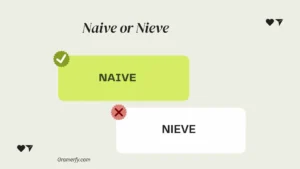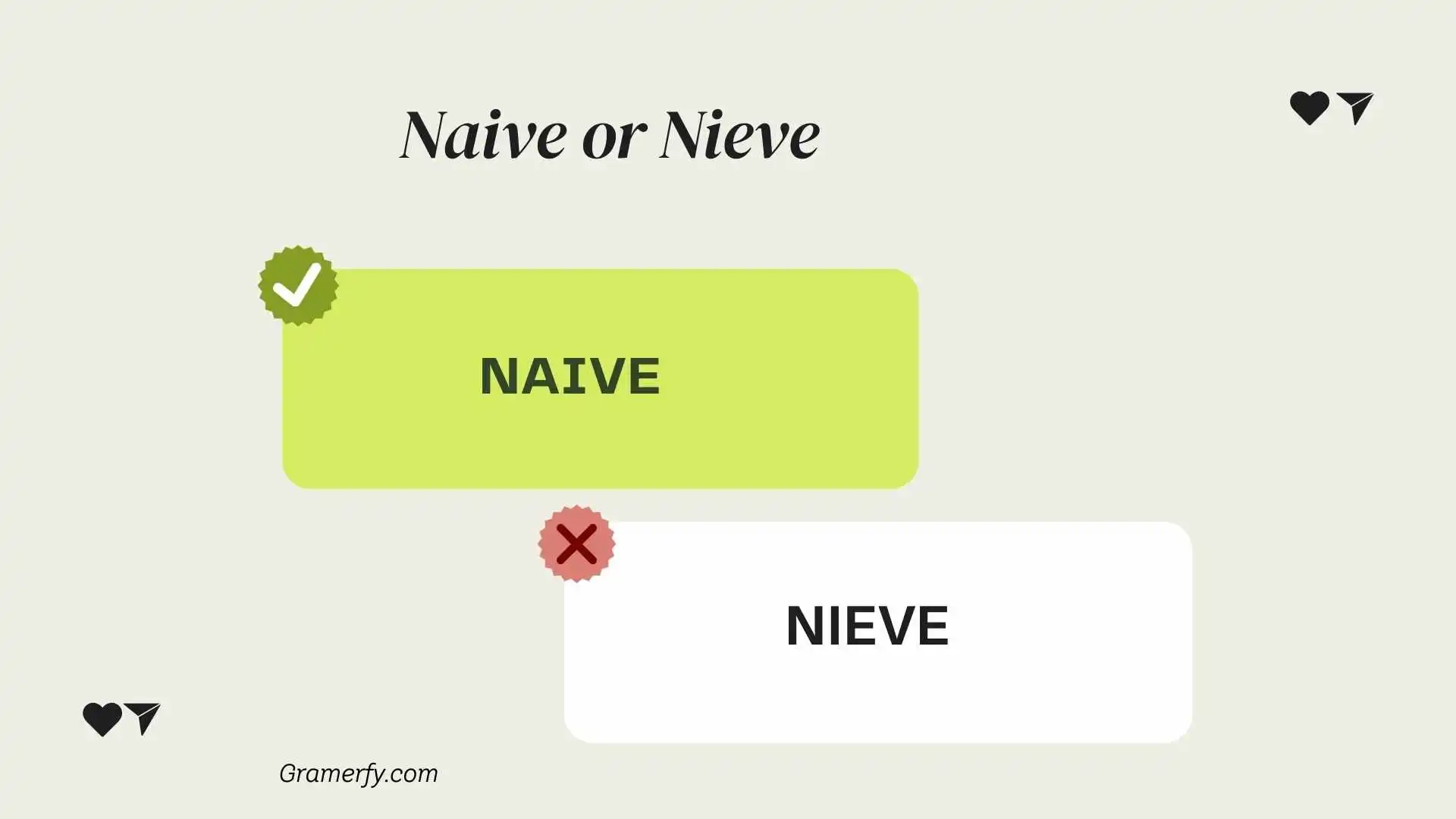
Naive or Nieve have you ever paused while writing and wondered which one is actually correct? You’re not alone. Many people type a word quickly, only to second-guess it moments later.
A tiny spelling difference can change everything, especially when you want your writing to look polished and professional. The confusion between “naive” and “nieve” is surprisingly common across emails, blogs, and social media posts.
One version appears frequently in everyday writing, while the other raises questions about whether it’s a real English word at all.
What Does “Naive” Mean?
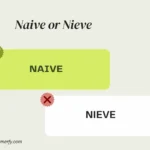
Naive is the correct spelling of the word used in English.
Meaning:
- Naive describes someone who is innocent, inexperienced, or overly trusting.
- It often refers to a lack of worldly knowledge or sophistication.
Examples:
- She was naive to believe that everyone at the office was honest.
- A naive child often asks questions that adults might find awkward.
- He gave a naive answer, showing he hadn’t faced real-life challenges yet.
Key point: The word has French origins, spelled naïve, with a diaeresis (two dots) over the “i,” though in English, it’s commonly written as naive without the dots.
What About “Nieve”?
Nieve is not a correct English word for describing innocence or lack of experience.
- Nieve does exist in Spanish, where it means “snow.”
- In English, using nieve instead of naive is a spelling mistake.
Example of incorrect usage:
- ❌ She was very nieve to trust him. (Wrong)
- ✅ She was very naive to trust him. (Correct)
So, whenever you want to describe innocence or inexperience in English, always use naive.
Naive vs. Nieve: Quick Comparison
| Word | Correct in English? | Meaning | Notes | Example |
| Naive | ✅ Yes | Innocent, inexperienced | Commonly used; sometimes spelled naïve | He’s too naive to understand politics. |
| Nieve | ❌ No | N/A in English | Spanish word for snow; incorrect in English | ❌ She was nieve to trust him. |
How to Use “Naive” Correctly
- Describing People:
- She’s naive about the dangers of online scams.
- She’s naive about the dangers of online scams.
- Describing Ideas or Plans:
- It’s naive to think money grows on trees.
- It’s naive to think money grows on trees.
- In Writing:
- Avoid using nieve in English writing. Stick with naive.
- Avoid using nieve in English writing. Stick with naive.
Tip: Think of the “i” in naive as standing for innocent. It’s a simple mnemonic to remember the correct spelling.
Common Mistakes and Spelling Tips
1: Writing nieve instead of naive
- ❌ She’s too nieve to see the truth.
- ✅ She’s too naive to see the truth.
2: Mispronouncing naive
- Correct pronunciation: /naɪˈiːv/ (ny-eve)
- Incorrect: /nɪv/ or /neev/
3: Confusing with other words
- Do not mix naive with native, knife, or niece.
Spelling Tips:
- Remember: naive = i before e after n.
- Think: “A naive person has innocent eyes” → helps recall the “i.”
- If unsure, use a spell-checker or dictionary.
Multiple Examples of “Naive” in Sentences
- The young intern was too naive to notice office politics.
- It was naive of him to believe that everyone agreed with his plan.
- Naive tourists often fall for street scams in big cities.
- Her naive optimism inspired the whole team.
- The movie portrayed a naive hero who learns life’s harsh truths.
FAQs (People Also Ask)
Q1: Is “nieve” correct English?
No, nieve is incorrect in English. Use naive to describe innocence or inexperience.
Q2: Can I use “naïve” with the dots?
Yes! The spelling naïve is traditional, showing the French origin, but naive without the dots is more common in English.
Q3: How do you pronounce “naive”?
It’s pronounced /naɪˈiːv/ (ny-eve).
Q4: What is the difference between naive and innocent?
- Naive often implies a lack of experience or knowledge, sometimes leading to mistakes.
- Innocent implies pure or morally clean, without the idea of lack of experience.
Q5: Is “naive” formal or informal?
It’s neutral and can be used in formal writing, everyday speech, or literature.
Q6: Can animals be described as naive?
Yes, when they show trusting or inexperienced behavior. Example: “The naive puppy followed strangers too easily.”
Conclusion
Knowing the difference between naive and nieve is simple but crucial. Naive is the correct English word to describe innocence, inexperience, or trusting behavior. Using nieve is a common spelling mistake because it looks similar, but it’s actually a Spanish word for “snow.”
To avoid mistakes: remember the spelling trick with the “i” for innocence, practice using it in sentences, and always double-check if you’re unsure. By mastering this tiny detail, your writing becomes more professional, confident, and error-free. Next time you want to describe someone who is trusting or inexperienced, just think: naive, not nieve!