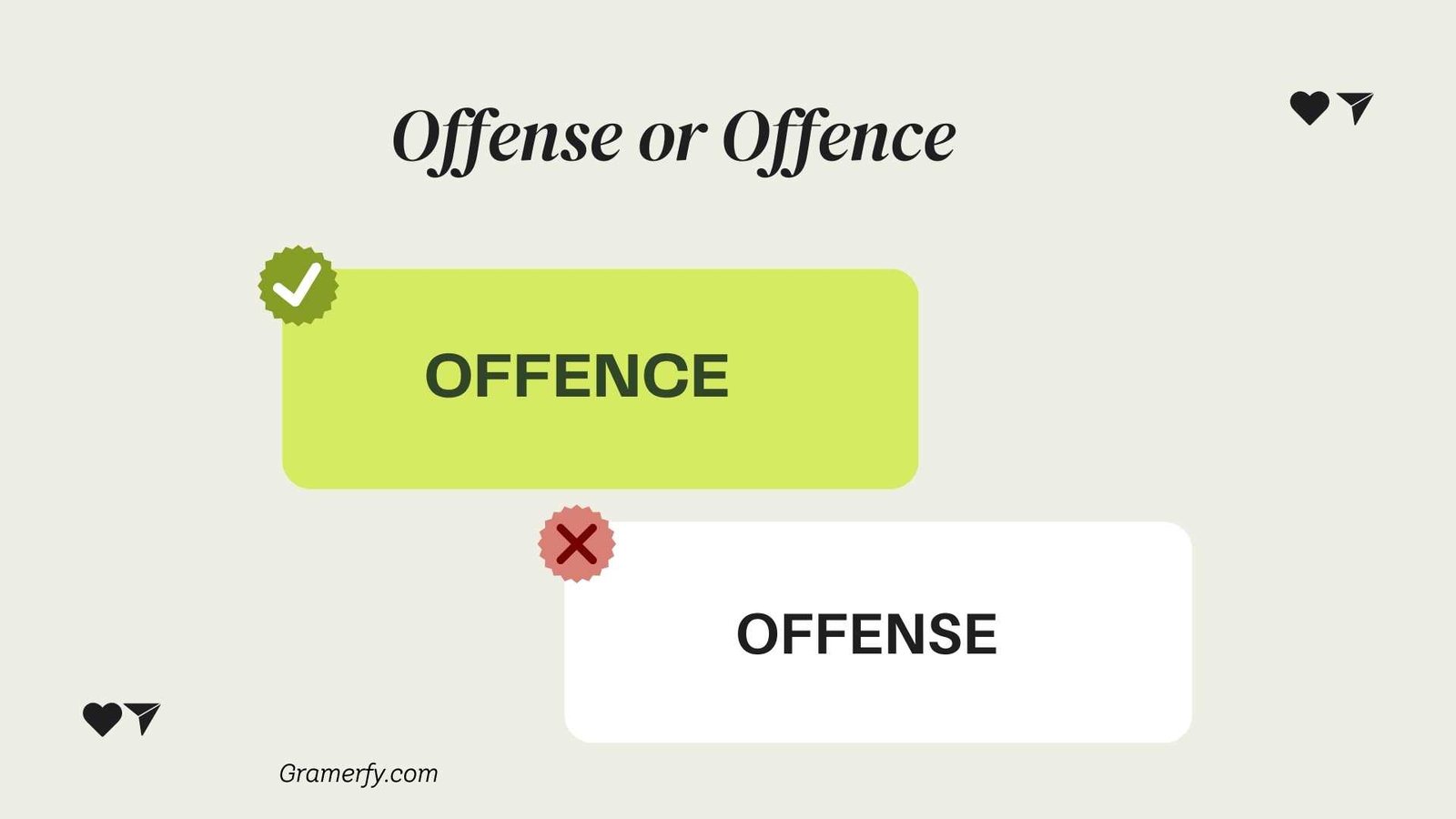
Have you ever paused mid-conversation, unsure whether to write “offense” or “offence”? This tiny difference can spark confusion, debates, or even embarrassment in both casual chats and professional writing.
While they sound identical, the spelling reveals where your English roots lie American or British. Understanding the distinction is more than just grammar; it’s about communicating clearly and confidently.
You’re drafting an email, penning a blog, or simply texting a friend, choosing the right version can shape how your message is perceived. In a world where words carry weight, even a small misstep can alter meaning or impression.
Meaning and Usage
What Does “Offense” or “Offence” Mean?
Both offense and offence refer to:
- A violation of a law, rule, or social norm
- The feeling of being hurt, insulted, or upset
- An attacking move in sports
In short, the meaning is the same; only the spelling and regional preference differ.
Regional Differences
| Word | English Type | Example Use |
| Offense | American English | He committed a serious offense at work. |
| Offence | British English | He committed a serious offence at work. |
✅ Tip: If you are writing for an American audience, always use offense. For British or Commonwealth audiences, use offence.
How to Use “Offense” and “Offence”
1. Legal Context
- American English:
- “The company faced a federal offense for breaking safety laws.”
- “The company faced a federal offense for breaking safety laws.”
- British English:
- “The company faced a criminal offence under UK law.”
- “The company faced a criminal offence under UK law.”
2. Emotional or Personal Context
- American English:
- “She took offense at his comment.”
- “She took offense at his comment.”
- British English:
- “She took offence at his comment.”
- “She took offence at his comment.”
3. Sports Context
- American English:
- “The team scored on the first offense.”
- “The team scored on the first offense.”
- British English:
- “The team scored on the first offence.”
- “The team scored on the first offence.”
Common Mistakes & Spelling Tips
- Mixing US and UK spellings
- ❌ Wrong: “He took offense at the remark.” (in UK writing)
- ✅ Correct: “He took offence at the remark.”
- ❌ Wrong: “He took offense at the remark.” (in UK writing)
- Confusing “offense/offence” with “defense/defence”
- Both pairs follow the same pattern: -se for American English and -ce for British English.
- Both pairs follow the same pattern: -se for American English and -ce for British English.
- Avoid using both spellings in the same document
- It can look unprofessional and confuse readers.
- It can look unprofessional and confuse readers.
💡 Tip: Pick your audience first. Use American spelling for US readers and British spelling for UK, Canada, Australia, or India.
Examples of Correct Usage
In Sentences (American English – Offense)
- He was charged with a serious offense.
- Don’t take offense at my joke; I was only kidding.
- The basketball team switched from defense to offense quickly.
In Sentences (British English – Offence)
- He was charged with a serious offence.
- Don’t take offence at my joke; I was only joking.
- The football team moved from defence to offence smoothly.
Comparison Table: Offense vs Offence
| Feature | Offense (US) | Offence (UK) |
| Spelling | -se | -ce |
| Audience | American English | British English |
| Meaning | Same as UK | Same as US |
| Examples | legal, emotional, sports | legal, emotional, sports |
| Tip | Use for US readers | Use for UK/ Commonwealth |
Frequently Asked Questions (FAQs)
1. Can I use “offense” in British English?
Yes, people will understand it, but it is considered American spelling. British publications usually prefer offence.
2. Are “offense” and “offence” pronounced differently?
No. Both are pronounced exactly the same: /əˈfens/
3. Is “offense” always negative?
Mostly, yes. It can mean a crime, insult, or attack. However, in sports, it just means the act of attacking or scoring.
4. How do I remember which one to use?
Think:
- -se → US English
- -ce → UK English
This rule applies to offense/offence and defense/defence.
5. Can I mix both spellings in one article?
No. Stick to one version to maintain consistency and professionalism.
Additional Tips
- When writing for online content, always check your target audience’s location.
- Use spellcheck tools with the correct English variant (US or UK).
- In formal writing, legal contexts, or exams, using the correct regional spelling is crucial.
Conclusion
Understanding the difference between offense and offence is easy once you remember the regional spelling rules. The meaning stays the same, but American English prefers -se, and British English prefers -ce.
By following these simple tips and examples, you can confidently use the right spelling in your writing. Remember: consistency is key!