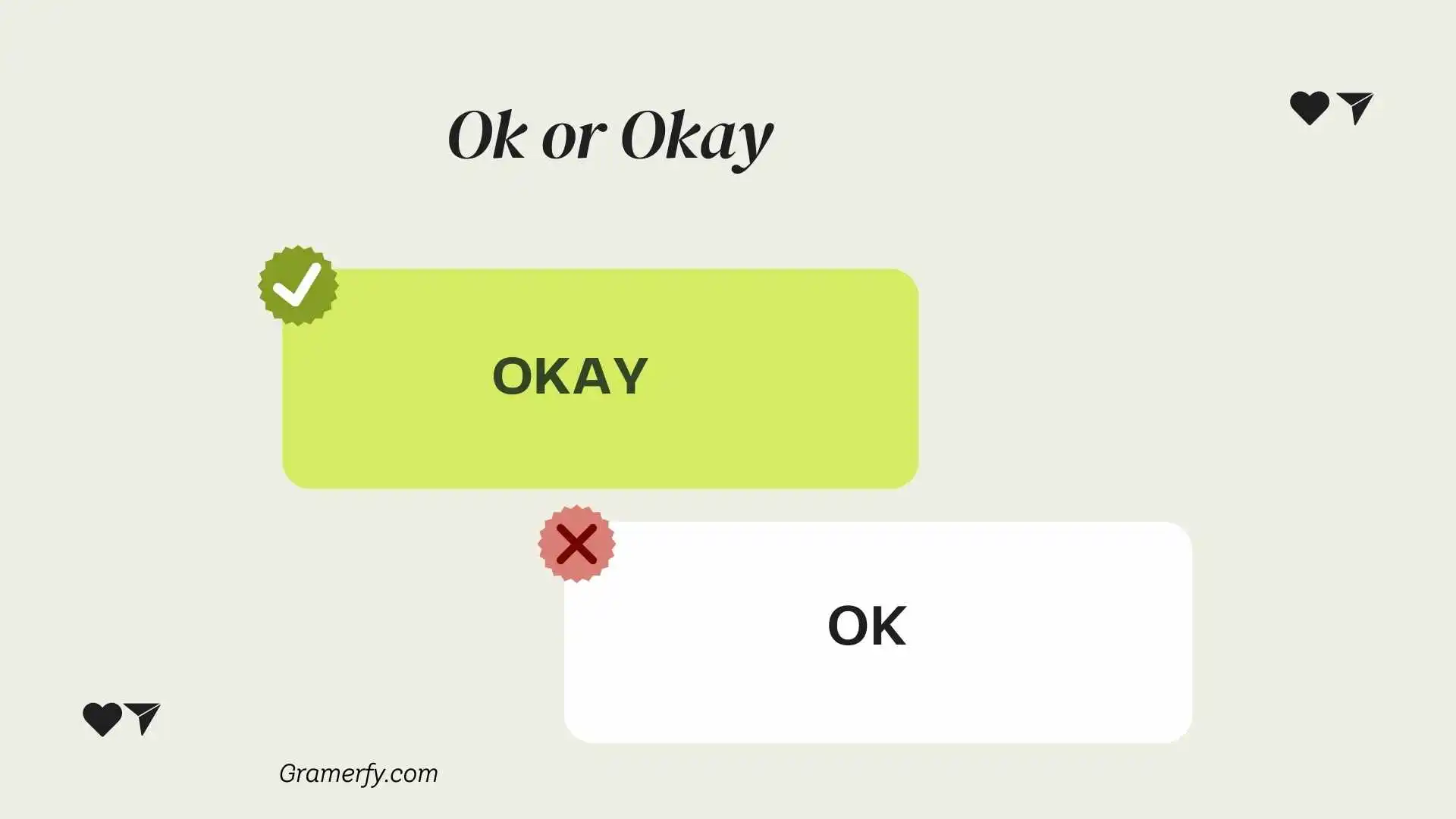
In everyday conversations, few words are used as often as “Ok” or “Okay.” Whether you’re agreeing with someone, confirming a message, or simply acknowledging a statement, this small word carries surprising power.
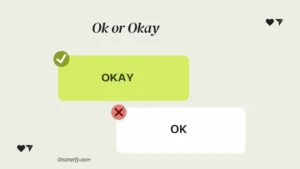
But have you ever wondered which one is correct “Ok” or “Okay”? While they seem identical, their usage, tone, and context can slightly change the meaning of your message.
From casual text messages and social media chats to professional emails and formal writing, people use both forms every single day. Yet many still feel confused about which version sounds more natural, more polite, or more professional.
What Does “Ok” Mean?
The word ok is used to show agreement, acceptance, or that something is satisfactory. It is informal but widely recognized in spoken and written English.
Examples of “Ok” in Sentences
- Agreement:
- A: “Can we meet at 5 pm?”
- B: “Ok, that works for me.”
- A: “Can we meet at 5 pm?”
- Acknowledgment:
- “Ok, I’ll send you the report tomorrow.”
- “Ok, I’ll send you the report tomorrow.”
- Satisfactory:
- “The movie was ok, but not great.”
- “The movie was ok, but not great.”
Key Notes About “Ok”
- Short and informal.
- Often used in casual text messages, emails, and conversation.
- Can appear in lowercase (ok) or uppercase (OK). Both are acceptable.
What Does “Okay” Mean?
Okay is just a longer form of ok, carrying the same meaning: agreement, approval, or something being acceptable.
Examples of “Okay” in Sentences
- Agreement:
- “Okay, I’ll join you for lunch.”
- “Okay, I’ll join you for lunch.”
- Acknowledgment:
- “Okay, I understand the instructions.”
- “Okay, I understand the instructions.”
- Satisfactory:
- “The book was okay, nothing special.”
- “The book was okay, nothing special.”
Key Notes About “Okay”
- Slightly more formal than ok, suitable for both spoken and written English.
- Commonly used in professional emails and formal writing when informality is acceptable.
- More readable in long texts because it looks complete.
Ok vs Okay: Key Differences
While ok and okay are mostly interchangeable, some subtle differences exist. Here’s a simple comparison table:
| Feature | Ok | Okay |
| Formality | Informal | Slightly more formal |
| Common Usage | Texts, casual conversation | Written content, professional emails, formal conversation |
| Length | Short (2 letters) | Longer (4 letters) |
| Perception | Very casual | Polite, complete |
| Spelling Flexibility | OK, ok | Okay |
Common Mistakes with “Ok” and “Okay”
Even though both words are widely used, learners often make mistakes. Here’s what to watch out for:
1. Capitalization Errors
- ❌ Incorrect: “ok, I will do it.”
- ✅ Correct: “Ok, I will do it.” or “OK, I will do it.”
- Tip: At the beginning of a sentence, capitalize it.
2. Using “Ok” in Formal Writing
- ❌ Incorrect in formal essays: “Ok, let’s start the project.”
- ✅ Better: “Okay, let’s start the project.”
3. Confusing “Okay” with “All right”
- ❌ Incorrect: “Are you okay with the plan?” (meaning: “Are you all right?” vs “Do you agree?”)
- ✅ Correct: “Are you okay with the plan?” (agreement context is fine, but health context is different)
4. Overusing in Texts
- Avoid using ok repeatedly in emails or essays. It can seem lazy or careless.
Spelling Tips for Beginners
- Ok is short and easy, but avoid it in formal writing.
- Okay is safer for essays, emails, and professional contexts.
- Remember: OK in uppercase is often used for emphasis in casual chats.
- Pronunciation is the same for both: /oʊˈkeɪ/.
How to Use “Ok” and “Okay” Correctly: Examples
In Casual Conversation
- “Ok, I’ll call you later.”
- “Is it ok if I borrow your book?”
In Texts and Messaging
- “OK, got it!”
- “Are you coming tonight? Okay, see you there.”
Formal Writing
- “Okay, we will proceed with the next step.”
- “The plan is okay for implementation, but further review is recommended.”
Expressing Emotions or Tone
- Neutral: “The test was okay.”
- Agreement: “Ok, I agree with your suggestion.”
- Polite emphasis: “Okay, thank you for your help.”
Fun Facts About “Ok” and “Okay”
- Origin: The exact origin is debated, but one theory suggests OK comes from “oll korrect,” a humorous misspelling of “all correct” in the 1830s.
- Global Use: “Ok” and “okay” are understood in almost every language today.
- Versatility: Can be used as adjective, adverb, interjection, or noun:
- Adjective: “The results are ok.”
- Adverb: “He did okay on the exam.”
- Interjection: “Ok! Let’s go.”
- Noun: “Give me the ok to start.”
- Adjective: “The results are ok.”
FAQs (People Also Ask)
1. Is “ok” correct or “okay” correct?
Both are correct. Use ok for casual writing and okay for formal or polite contexts.
2. Can I use “OK” in emails?
Yes, but it’s better to use Okay in professional or formal emails.
3. How do you pronounce “ok” and “okay”?
Both are pronounced the same: /oʊˈkeɪ/.
4. Is “ok” considered slang?
No, it’s standard English but informal. Okay is slightly more formal.
5. Can “ok” or “okay” be used to agree politely?
Yes. Okay often sounds more polite in conversation:
- “Okay, I understand your point.”
6. What is the difference between “okay” and “all right”?
- Okay = agreement or acceptability
- All right = agreement or correctness; sometimes implies reassurance
Conclusion
Both ok and okay are essential words in English, easy to use, and understood globally. Ok is casual, quick, and perfect for texts or informal chats. Okay is slightly more formal and better suited for essays, emails, or professional contexts. Remember to capitalize at the beginning of a sentence and avoid overusing them.
With practice, you’ll instinctively know which form fits the situation. By using this guide, your English will sound natural, friendly, and error-free when expressing agreement, acknowledgment, or approval.