There’s something magical about the humble omelet or omelette a simple dish that transforms everyday eggs into a canvas of endless flavors.
It’s a fluffy French-style creation, a cheesy breakfast delight, or a veggie-packed power meal, the omelet has an unmatched ability to satisfy cravings at any time of the day.
People search for it not just for recipes, but for inspiration ways to turn ordinary ingredients into extraordinary bites. From breakfast tables to brunch spreads, omelets bring comfort, creativity, and quick culinary magic together in one sizzling pan.
Meaning of Omelet and Omelette
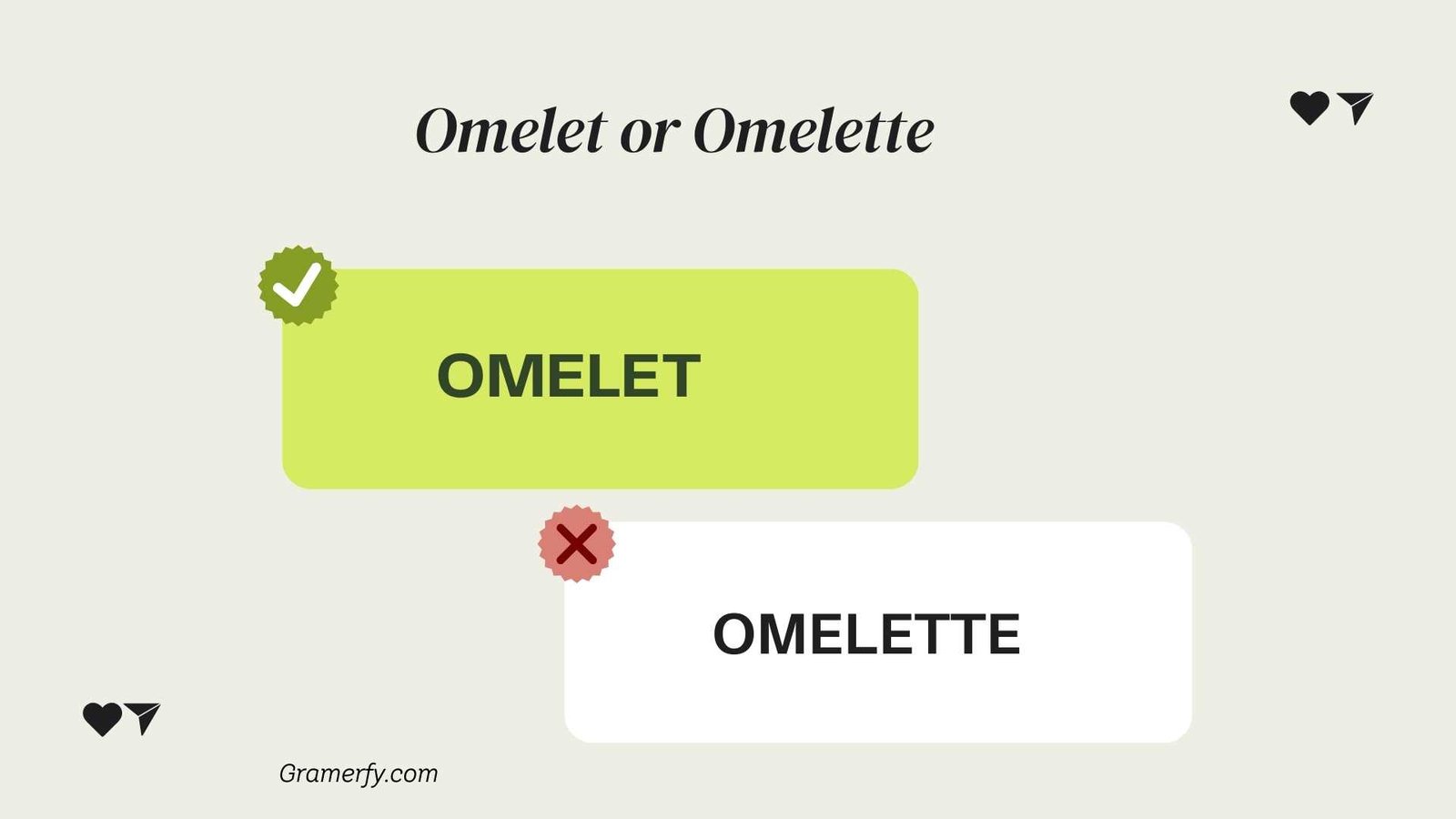
Both omelet and omelette refer to the same dish: beaten eggs cooked in a pan, often folded around cheese, vegetables, or meat.
- Omelet – This is the American English spelling. It’s widely used in the United States.
- Omelette – This is the British English spelling. It’s common in the United Kingdom, Canada, Australia, and other countries that follow British English.
Essentially, there’s no difference in pronunciation or meaning. The only difference is the spelling.
Correct Usage of “Omelet”
Omelet is preferred in American English. You will see it on menus, cookbooks, and recipes in the United States.
Examples:
- I made a cheese omelet for breakfast this morning.
- She ordered a mushroom omelet at the diner.
- The restaurant serves a three-egg omelet with your choice of fillings.
Tip: Use omelet if you are writing for an American audience or using American English conventions.
Correct Usage of “Omelette”
Omelette is the British English spelling. It is widely recognized in the UK, Europe, and other countries following British spelling rules.
Examples:
- I cooked a Spanish-style omelette with potatoes and onions.
- He enjoyed a smoked salmon omelette at the café.
- The chef recommends a fluffy cheese omelette for brunch.
Tip: Use omelette for British English writing, international English, or when writing for a UK-based audience.
Omelet vs Omelette: A Quick Comparison Table
| Feature | Omelet | Omelette |
| English Variant | American English | British English |
| Pronunciation | /ˈɑː.mə.lət/ | /ˈɒm.ə.lət/ |
| Common Usage | USA, American recipes | UK, Europe, Canada, Australia |
| Spelling | Shorter, simpler | Longer, French-influenced |
| Example Sentence | I had a ham omelet today. | I had a ham omelette today. |
Common Mistakes and Spelling Tips
Many people make mistakes with omelet and omelette, especially non-native English speakers. Here are some tips to avoid errors:
- Don’t mix spellings
- ❌ I had an omelet with mushrooms, and then another omelette.
- ✅ I had an omelet with mushrooms, and then another omelet.
- ❌ I had an omelet with mushrooms, and then another omelette.
- Remember the region
- Use omelet in American English.
- Use omelette in British English.
- Use omelet in American English.
- Don’t overthink pronunciation
- Both words are pronounced almost the same; focus on correct spelling for your audience.
- Both words are pronounced almost the same; focus on correct spelling for your audience.
- French connection
- Omelette comes from French, which is why it’s longer and more common in British English.
- Omelette comes from French, which is why it’s longer and more common in British English.
Examples of Omelet and Omelette in Sentences
Omelet (American English)
- Every Sunday, my mother makes a delicious cheese omelet.
- I prefer a veggie omelet with spinach and tomatoes.
- The diner serves a Denver omelet with ham, peppers, and onions.
Omelette (British English)
- She prepared a mushroom and cheese omelette for lunch.
- The chef taught me how to make a classic French omelette.
- I ordered a Spanish omelette filled with potatoes and onions.
Fun Tip: International Menus
You’ll often see omelette on international menus, even in the U.S., because it sounds fancy and French-inspired. But in casual American English, omelet is standard.
How to Remember the Difference
Here are a few memory tricks:
- Omelet = America → Shorter spelling for fast American style.
- Omelette = Europe → Longer spelling, fancy French connection.
- Think of menus: U.S. diners use omelet, French cafés use omelette.
FAQs (People Also Ask)
1. Is it “omelet” or “omelette”?
Both are correct. Use omelet in American English and omelette in British English.
2. How do you pronounce omelet and omelette?
- Omelet: /ˈɑː.mə.lət/
- Omelette: /ˈɒm.ə.lət/
They sound very similar.
3. Which spelling is more common?
- Omelet is more common in the U.S.
- Omelette is more common in the UK and Europe.
4. Can I use omelette in the U.S.?
Yes, especially on menus or when referring to French-style dishes. But omelet is the standard American spelling.
5. Are there other variations?
No, these are the main two accepted spellings. Avoid creating new versions like “omlet” or “omlette,” as they are incorrect.
Conclusion
Knowing whether to write omelet or omelette is simple once you remember your audience. If you’re in the U.S., go with omelet. If you’re in the UK or writing international English, choose omelette. Both words refer to the same delicious egg dish, so don’t worry about pronunciation. Focus on consistent spelling, and you’ll never make a mistake again.
Next time you’re cooking or writing a recipe, you can confidently use the correct form. And remember, menus might make omelette look fancier, but your taste buds won’t mind either way!