Life is unpredictable, and loss is an inevitable part of our journey. When someone we love has passed away, words often fall short of expressing the depth of our emotions.
People frequently search for the meaning, usage, and difference between phrases like “passed away” and the commonly mistaken “past away”, hoping to communicate their feelings respectfully and accurately.
Understanding these phrases not only helps in expressing condolences with sensitivity but also ensures that messages, tributes, or memorials carry the right sentiment.
Meaning and Usage of “Passed Away”
What Does “Passed Away” Mean?
“Passed away” is a polite and formal way to say that someone has died. It is often used in conversations, obituaries, or messages expressing sympathy.
Examples:
- My grandmother passed away last night.
- We were saddened to hear that Mr. Smith passed away.
- She passed away peacefully in her sleep.
Key Points About “Passed Away”
- Verb phrase: It is made of the verb “passed” + adverb “away.”
- Formal/polite tone: More respectful than saying “died.”
- Used only for people (or sometimes pets): Not for objects or events.
Meaning and Usage of “Past Away”
What Does “Past Away” Mean?
Actually, “past away” is not correct English. Many learners mistakenly write it because it sounds similar to “passed away.”
Why it’s wrong:
- “Past” is usually a noun, adjective, or preposition (e.g., past mistakes, in the past).
- It cannot be used as a verb.
Incorrect Examples:
- ❌ My grandfather past away yesterday.
- ❌ She past away peacefully.
If you see “past away” in writing, it is a spelling mistake and should always be corrected to “passed away.”
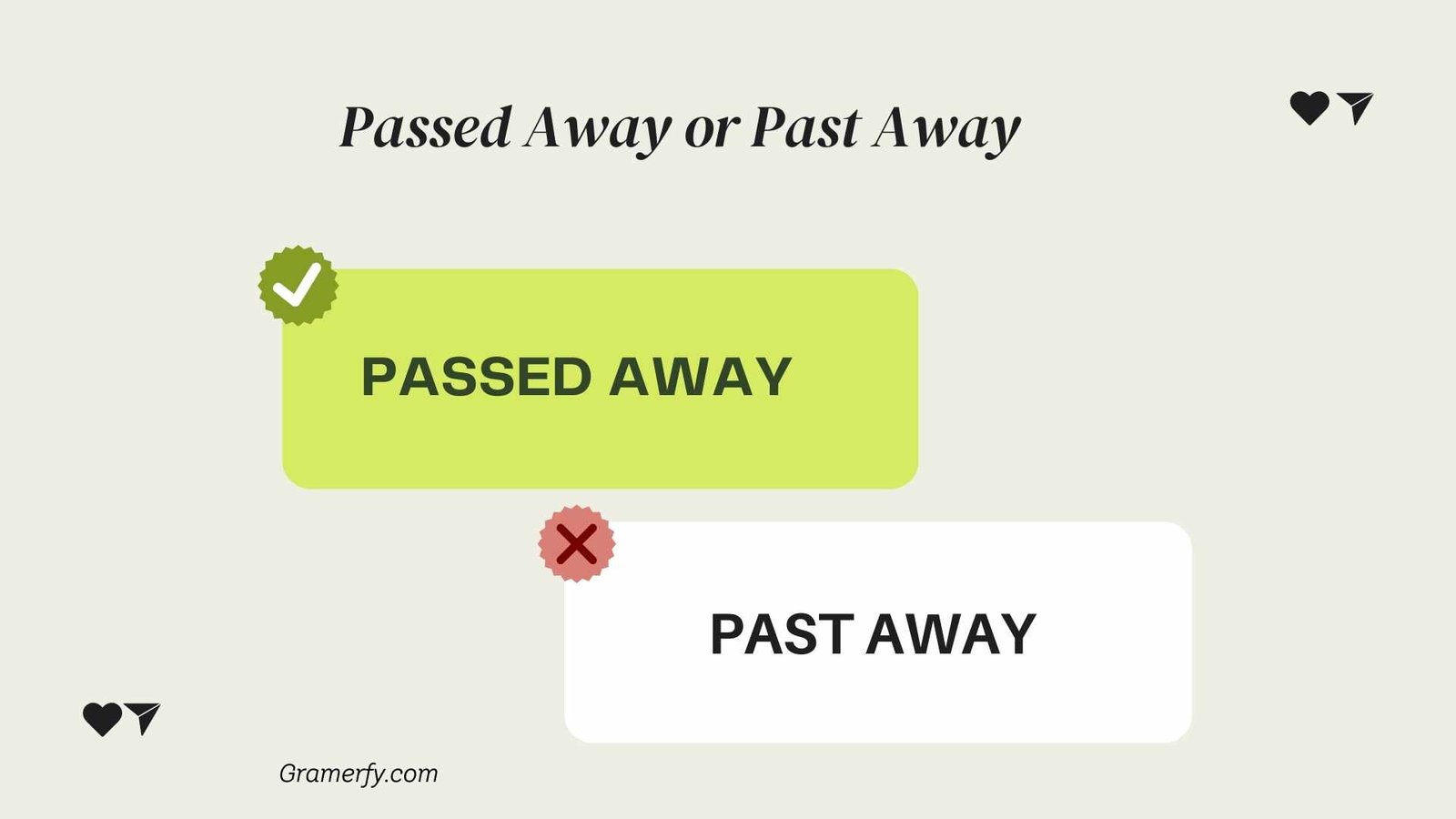
Passed Away vs Past Away: Quick Comparison
| Feature | Passed Away | Past Away |
| Correct English? | ✅ Yes | ❌ No |
| Meaning | Died | None (incorrect) |
| Part of Speech | Verb phrase | Incorrect |
| Usage Example | My uncle passed away last year. | ❌ My uncle past away last year. |
| Tone | Polite, formal | — |
Common Mistakes With “Passed Away”
Even though “passed away” is correct, learners often make small errors. Here are the most common ones:
1. Confusing Past and Passed
- Incorrect: He past away last night.
- Correct: He passed away last night.
Tip: Remember, passed is the past tense of the verb pass, and past refers to time or location.
2. Using it for Objects
- Incorrect: My phone passed away.
- Correct: My phone broke.
Tip: Only use “passed away” for people or sometimes pets.
3. Mixing Tenses
- Incorrect: She passes away yesterday.
- Correct: She passed away yesterday.
Tip: Always use past tense “passed” because it refers to something that already happened.
How to Use “Passed Away” in Sentences
Here are multiple examples to help you understand the proper usage:
- After a long illness, my dog passed away peacefully.
- The famous actor passed away last year, leaving his fans in shock.
- Our neighbor’s father passed away, and we sent flowers to the family.
- It is always hard when someone you love passes away.
Tip: You can also combine it with polite phrases:
- We are deeply saddened to hear that your mother passed away.
- May he rest in peace; he passed away too soon.
Spelling Tips
To avoid mistakes:
- Passed → Use when referring to someone dying.
- Past → Use when referring to time or history, never for death.
- Double-check if you are writing “passed away” in messages or formal notes.
FAQs (People Also Ask)
1. Can we use “past away” instead of “passed away”?
No. “Past away” is incorrect. Always use “passed away” when talking about someone who died.
2. Is “passed away” formal or informal?
It is polite and formal, suitable for letters, speeches, and respectful conversations.
3. Can we use “passed away” for animals?
Yes, it is common to say a pet passed away, especially if you want to be polite.
4. Can “passed away” be used in present tense?
No. It is past tense, so you cannot say “passes away” to refer to something that already happened.
5. What is a simpler way to say “passed away”?
You can say died, but it is less polite. Example: “My grandfather died last year.”
Tips to Remember the Difference
- Think about verbs vs nouns: “Passed” is a verb; “past” is not.
- Use context: If talking about death, it’s passed away.
- Check the spelling: Many mistakes happen because people write what they hear, not what is correct.
Examples From Everyday Life
Here’s how “passed away” appears in different contexts:
1. In News or Obituaries
- The legendary musician passed away at the age of 82.
2. In Social Media
- Feeling sad today. My childhood pet passed away last night.
3. In Conversations
- A: Did you hear about Mrs. Johnson?
- B: Yes, she passed away peacefully.
4. In Letters
- Dear friend, I am sorry to inform you that my father passed away.
Emotional Tone and Politeness
“Passed away” is considered gentle and respectful. It is especially helpful in sensitive situations.
- Saying “died” can feel blunt.
- Saying “passed away” softens the message.
Common Collocations With “Passed Away”
- Peacefully passed away – indicates a calm death.
- Suddenly passed away – indicates unexpected death.
- Sadly passed away – expresses grief.
Examples:
- My aunt peacefully passed away after a long illness.
- Unfortunately, he suddenly passed away last night.
- We are heartbroken that she sadly passed away.
How to Correct Mistakes in Writing
If you find “past away” in your text:
- Identify the context: Are you talking about someone who died?
- Replace “past” with “passed”: Always use “passed away.”
- Double-check tense: Make sure the sentence is in past tense.
Example Correction:
- ❌ My grandfather past away last year.
- ✅ My grandfather passed away last year.
Summary Table: Passed Away vs Past Away
| Phrase | Correct Usage | Notes |
| Passed Away | ✅ Polite way to say someone died | Only for people/pets, past tense |
| Past Away | ❌ Incorrect | Common misspelling; avoid |
Conclusion
In conclusion, understanding the difference between “Passed Away” and “Past Away” is crucial for clear and respectful communication. “Passed Away” is the correct expression used to refer to someone’s death, carrying a tone of sensitivity and compassion. On the other hand, “Past Away” is a common mistake that can confuse readers and dilute the intended message.
Using the right phrase not only shows linguistic accuracy but also demonstrates empathy in difficult conversations. Remembering this subtle yet important distinction ensures your words honor the situation and convey your thoughts appropriately. Always choose clarity and care.