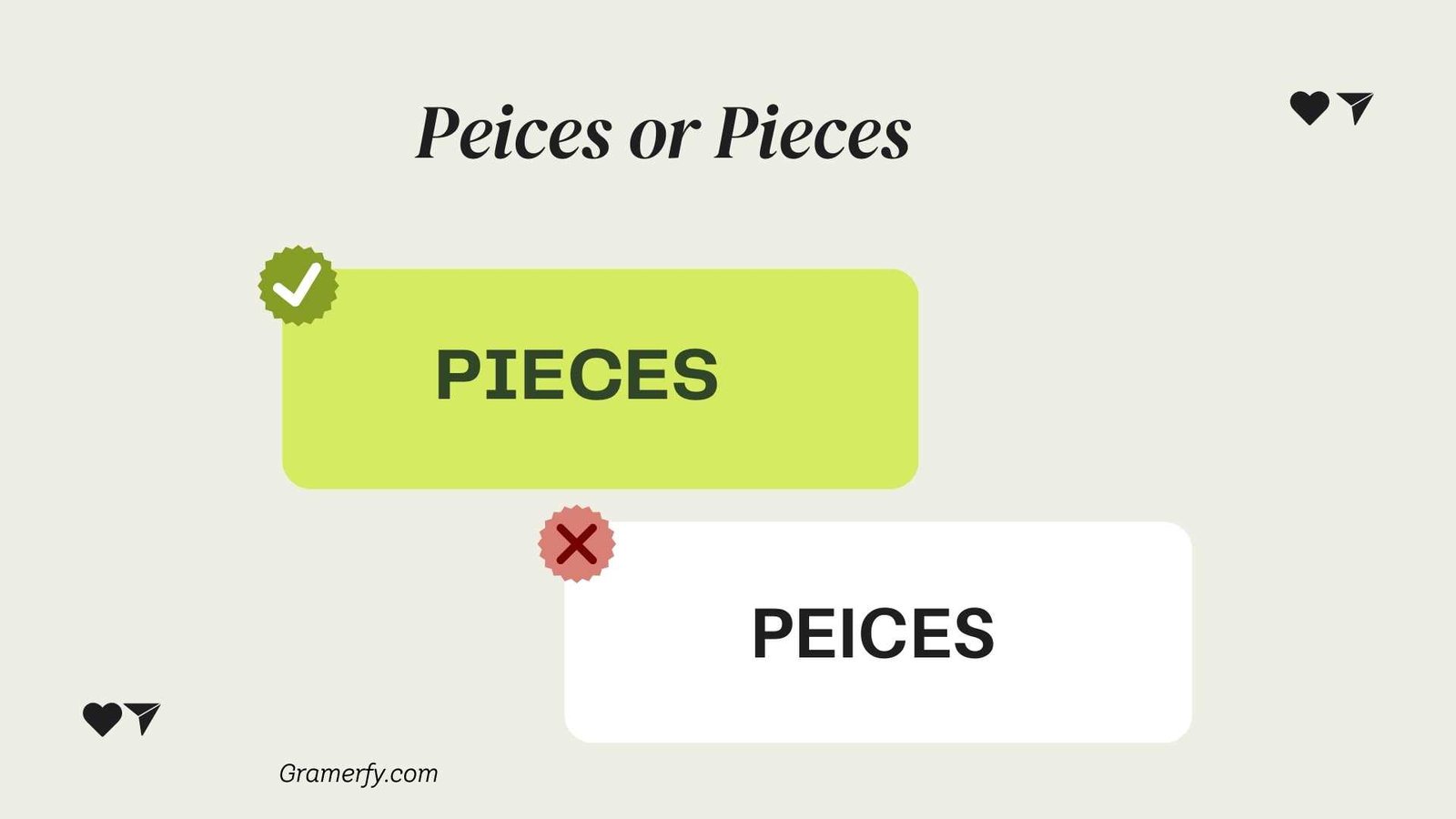
Choosing between “Peices” and “Pieces” can be confusing, especially when writing quickly or texting. Many people stumble over the spelling, unsure which version is correct.
Understanding the difference is important for clear communication, whether you’re writing an essay, a professional email, or a creative story.
The right spelling ensures your message looks polished and professional, while a small error can distract readers or change the meaning entirely. By exploring the correct usage, common mistakes, and helpful tips, anyone can master this tricky pair of words.
Meaning of “Pieces”
The correct spelling is pieces.
Pieces is a plural noun that refers to:
- A part or portion of something
- An individual item from a set
- A segment of a whole
Examples of “Pieces” in Sentences:
- I ate three pieces of chocolate.
- She bought a few pieces of furniture for her new home.
- The puzzle is missing several pieces.
Key Point: There is no word “peices” in standard English. Using peices is a spelling mistake.
Why “Peices” is Wrong
Many people type peices because the letters i and e are often confusing in English. A common rule people try to follow is:
“I before E, except after C.”
However, this rule is tricky and has many exceptions. For pieces, it follows the rule:
- Correct: pieces (i before e, after c)
- Incorrect: peices
Using peices in your writing will be considered a spelling error and can lower the credibility of your content, especially in professional or academic writing.
Comparison Table: Peices vs Pieces
| Word | Correct Usage | Meaning | Notes |
| Pieces | ✅ Correct | Parts or portions of something | Standard English spelling |
| Peices | ❌ Incorrect | N/A | Common spelling mistake |
Tip: Whenever you’re unsure, remember: pieces = correct.
Common Mistakes with “Pieces”
- Typing “peices” instead of “pieces”
- ❌ Wrong: I want two peices of cake.
- ✅ Correct: I want two pieces of cake.
- ❌ Wrong: I want two peices of cake.
- Mispronouncing “pieces”
- Some people say “pe-ices” (incorrect). Correct pronunciation: /ˈpiːsɪz/.
- Some people say “pe-ices” (incorrect). Correct pronunciation: /ˈpiːsɪz/.
- Using “piece” vs “pieces” incorrectly
- Use piece for one item, pieces for more than one.
- Example:
- One piece: I need one piece of paper.
- Multiple pieces: I need five pieces of paper.
- One piece: I need one piece of paper.
- Use piece for one item, pieces for more than one.
Easy Spelling Tips
Here are some tricks to remember the correct spelling:
- Think “i before e” after c
- Pieces → i before e
- Pieces → i before e
- Sound it out slowly
- Piece → “pe-ees” (long “ee” sound)
- Piece → “pe-ees” (long “ee” sound)
- Associate with examples
- A piece of cake → multiple pieces → always use pieces
- A piece of cake → multiple pieces → always use pieces
Multiple Examples of Correct Usage
- Can I have a piece of your sandwich?
- She broke the vase into small pieces.
- I bought three pieces of clothing yesterday.
- Each piece of advice is valuable.
- He wrote several pieces for the school magazine.
Tip: Practice writing a few sentences with “pieces” every day to make it stick.
FAQs (People Also Ask)
1. Is “peices” a correct word?
No, peices is a common spelling mistake. The correct word is pieces.
2. How do I remember the spelling of “pieces”?
Remember: i before e after c → pieces. Also, practice using it in sentences.
3. Can “piece” be singular and “pieces” plural?
Yes! Piece is singular, pieces is plural. Example: one piece, two pieces.
4. Are there other words like “pieces” that confuse learners?
Yes, words like receive, ceiling, believe also follow the i-before-e-after-c pattern, but English has many exceptions.
5. Does Google correct “peices” automatically?
Yes, most spell checkers and Google will suggest pieces if you type peices.
Conclusion
The correct spelling is always pieces, and peices is incorrect. Understanding this simple difference will improve your writing, make your content professional, and prevent embarrassing mistakes.
By following the spelling tips and examples in this guide, you’ll confidently write pieces correctly every time.