The word “Saviour or Savior” carries a weight that transcends mere letters it embodies hope, rescue, and redemption.
In stories, religious texts, or everyday conversations, a savior represents someone or something that steps in during moments of crisis, offering relief when all seems lost. But why does this word captivate us so deeply?
Because everyone, at some point, yearns for rescue be it from danger, despair, or life’s relentless challenges. The choice between “saviour” and “savior” might seem small, yet it reflects the rich diversity of English spelling traditions, bridging British and American usage.
Meaning of “Saviour” and “Savior”
Both saviour and savior have the same meaning. They refer to someone who saves others from danger, harm, or difficult situations. The word can be used literally or metaphorically.
- Literal meaning: A person who rescues others from physical danger.
- Metaphorical meaning: Someone who provides help, guidance, or relief in a challenging situation.
Example sentences:
- She is my saviour; I don’t know what I would have done without her.
- The firefighters were true saviors during the flood.
Correct Usage and Regional Differences
The main difference between saviour and savior is regional.
| Word | Region/Usage | Example |
| Saviour | British English | He is considered a saviour in his town. |
| Savior | American English | Superman is a modern-day savior. |
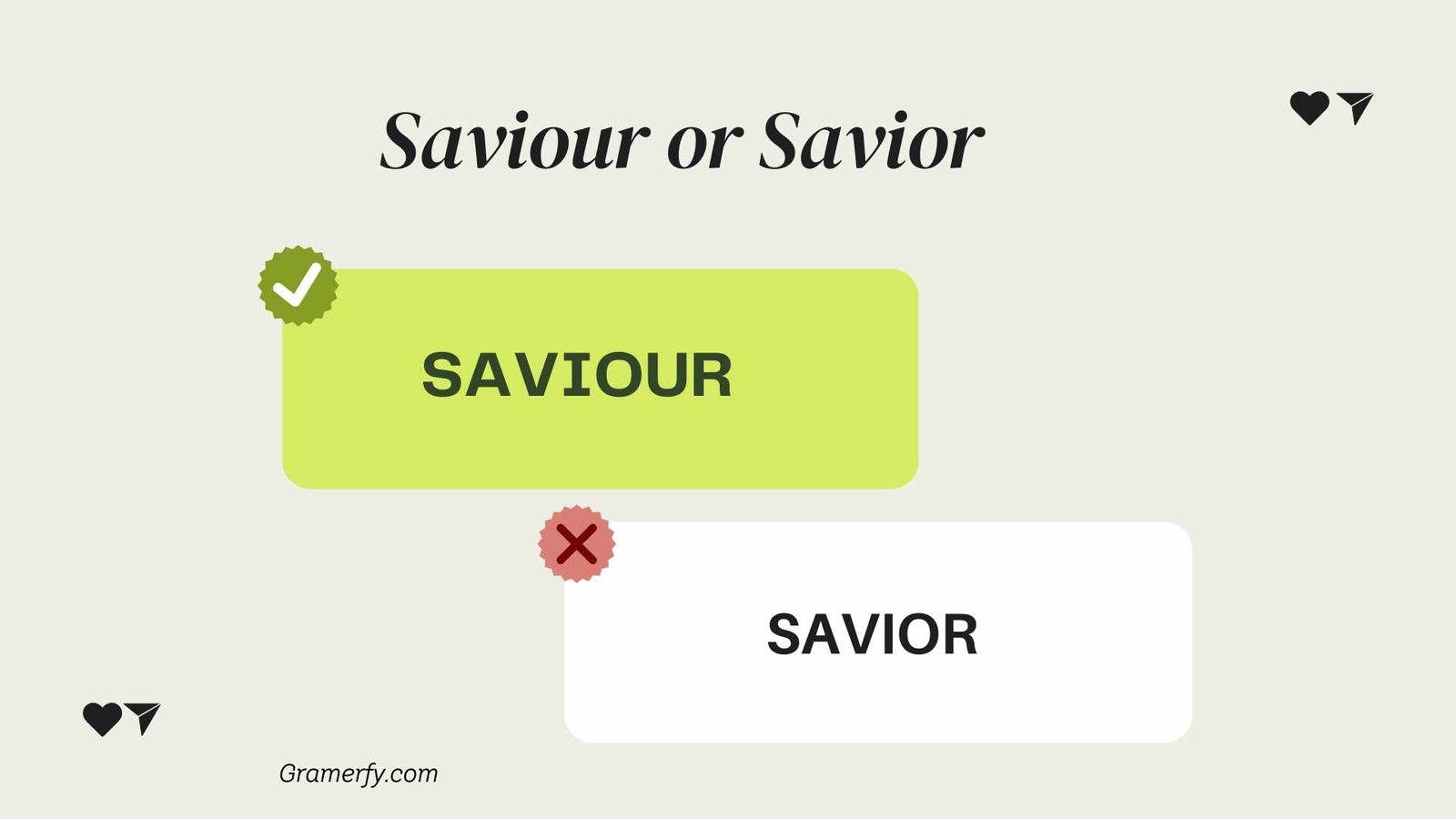
Both forms are correct; it just depends on whether you are using British or American English.
- British English: Use saviour
- American English: Use savior
Common Mistakes and Spelling Tips
1. Confusing British and American spelling
Many learners mix the spellings. Always remember:
- British = saviour (with u)
- American = savior (without u)
2. Misspelling the word
Common incorrect spellings:
- saviourr
- savuer
- savor (different word entirely, meaning taste)
3. Misusing in context
The word should refer to someone who saves or rescues, not just any person.
Incorrect: He is a savior of the party.
Correct: He is the savior of the project.
Examples of “Saviour” and “Savior” in Sentences
Using Saviour (British English)
- She was the saviour of the kittens trapped in the storm.
- The teacher became a saviour for the struggling students.
- During the crisis, he acted as a true saviour.
Using Savior (American English)
- The doctor was a savior for the injured hikers.
- He saw himself as the savior of the local community.
- Technology can sometimes be a savior in emergencies.
When to Use “Saviour” vs “Savior”
- If your audience is in the UK, Australia, or other British English-speaking countries, use saviour.
- If your audience is in the US, Canada, or other American English-speaking countries, use savior.
Pro Tip: If you are writing content online for a global audience, choose one version and stick with it throughout your text. Consistency improves readability and professionalism.
People Also Ask (FAQs)
1. Is “saviour” or “savior” correct?
Both are correct. Saviour is British English, and savior is American English.
2. How do you pronounce “saviour/savior”?
They are pronounced the same: /ˈseɪ.vjər/
3. Can “savior” be used for non-people?
Yes, it can refer to anything that saves or helps, e.g., “The new software was a savior for our workflow.”
4. Why do British words have an extra “u”?
Many British words retain the old spellings from French and Latin, while American English simplified them in the 19th century.
5. Are there other words like “saviour/savior”?
Yes, many British vs. American spellings differ by u:
- colour (UK) → color (US)
- honour (UK) → honor (US)
- favour (UK) → favor (US)
Additional Tips for English Learners
- Use context clues: If your text is formal or literary, British English spelling is often preferred.
- Check your audience: If writing for Americans, use savior.
- Spell check tools: Enable regional English settings in tools like Word or Grammarly.
- Practice with examples: Make sentences daily using both spellings.
Conclusion
Understanding the difference between saviour and savior is simple once you remember the regional rule. The meaning is the same, the pronunciation is identical, and the choice depends on your audience.
By following these tips, avoiding common mistakes, and practicing usage, you can confidently use either spelling in the correct context. Remember, clarity and consistency are key.