In conclusion, understanding the difference between “Seel” and “Seal” is essential for clear and accurate communication.
While “Seal” commonly refers to a stamp, an emblem, or even the marine animal, “Seel” is far less common and usually appears in specialized contexts, such as old English texts or certain proper nouns.
Mixing them up can lead to confusion, especially in writing, professional documents, or digital communication. By recognizing the correct usage, you not only enhance your language skills but also ensure that your message is precise and professional.
Meaning and Usage of “Seel”
What Does “Seel” Mean?
The word “seel” is rarely used in modern English. Historically, it comes from falconry (training birds of prey). Seel means:
- To close the eyes of a bird temporarily (usually a hawk or falcon) during training.
- In old English, it can also mean to stitch or fasten something.
Example Sentences:
- The falconer carefully seeled the hawk’s eyes to calm it.
- In old texts, the tailor seeled the cloth edges to prevent fraying.
Tips for Using “Seel”
- Mostly found in historical or technical contexts.
- Rarely used in daily conversation.
- Remember: seel is about birds or old practices, not general sealing.
Meaning and Usage of “Seal”
What Does “Seal” Mean?
The word “seal” is much more common and has several meanings:
- Animal: A marine mammal that lives in water.
- Example: We saw a seal swimming near the shore.
- Example: We saw a seal swimming near the shore.
- Fasten or Close: To close something tightly.
- Example: She sealed the envelope before mailing it.
- Example: She sealed the envelope before mailing it.
- Official Mark or Stamp: Used to show authenticity or approval.
- Example: The document had the company’s seal on it.
- Example: The document had the company’s seal on it.
- Figurative Meaning: To confirm or finalize something.
- Example: Their handshake sealed the deal.
- Example: Their handshake sealed the deal.
Seel vs Seal: Key Differences
| Feature | Seel | Seal |
| Meaning | Close a bird’s eyes temporarily | Marine animal; close or fasten; official mark |
| Usage Context | Falconry, historical texts | Everyday English, business, animals |
| Frequency | Rare | Very common |
| Example | The hawk was seeled during training. | She sealed the letter with wax. |
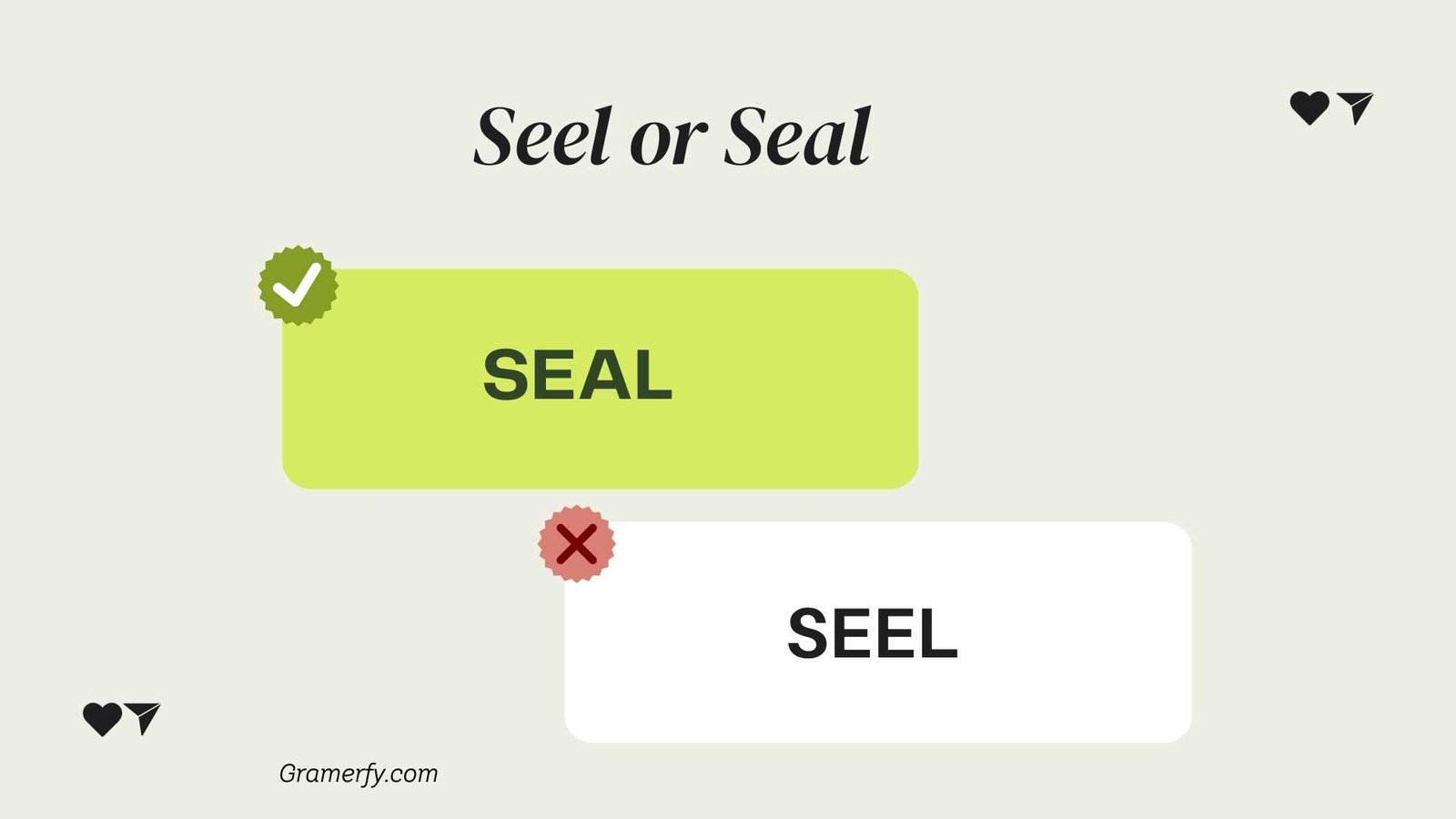
Quick Tip: If you are writing about everyday things like envelopes, deals, or animals, always use seal. Use seel only when talking about birds or historical contexts.
Common Mistakes & Spelling Tips
- Mistaking “seel” for “seal”
- ❌ Wrong: I seeled the letter.
- ✅ Correct: I sealed the letter.
- ❌ Wrong: I seeled the letter.
- Confusing meaning
- ❌ Wrong: We saw a seel at the beach.
- ✅ Correct: We saw a seal at the beach.
- ❌ Wrong: We saw a seel at the beach.
- Spelling tip:
- Remember seal has a “a”, which also appears in animal-this can help you remember it relates to the animal or general sealing.
- Seel has a double “e” like eyes-think of closing the bird’s eyes.
- Remember seal has a “a”, which also appears in animal-this can help you remember it relates to the animal or general sealing.
Examples of “Seel”
- The falconer seeled the young hawk carefully.
- Ancient texts often mention how the priest seeled sacred scrolls.
- During the ceremony, the falcon’s eyes were temporarily seeled to calm it.
Examples of “Seal”
Animal:
- A seal basked on the rocky shore.
- Baby seals are adorable and fluffy.
Closing/fastening:
- Please seal the jar tightly after use.
- He sealed the envelope before posting it.
Official mark:
- The king’s seal confirmed the law.
- Make sure the contract has the company seal.
Figurative:
- Their agreement sealed the partnership.
- Winning the final match sealed their victory.
When to Use “Seel” vs “Seal”
- Use Seel: Only in falconry or historical contexts.
- Use Seal: In modern writing for animals, closing, official marks, or confirming agreements.
Memory Trick:
- Seel → Eyes (double e)
- Seal → Animal / Close / Official
People Also Ask (FAQs)
Q1: Can “seel” be used in modern writing?
A: Rarely. It is mostly seen in historical texts or falconry. For everyday English, use seal.
Q2: Is “seal” a verb or a noun?
A: Both. Seal can be a noun (the animal, stamp) or a verb (to close or confirm).
Q3: Are “seel” and “seal” pronounced the same?
A: Almost. Both are pronounced /siːl/, so context matters to understand the meaning.
Q4: What is the origin of “seel”?
A: From Middle English, related to falconry and closing a bird’s eyes.
Q5: Can “seal” refer to digital security?
A: Yes, in modern contexts, seal can mean encrypt or secure digital information.
Conclusion
Understanding the difference between seel and seal is simple once you know the meanings and contexts.
Remember: By keeping these tips and examples in mind, you’ll avoid common mistakes and use the correct word every time. Practice using them in sentences, and soon it will feel natural.