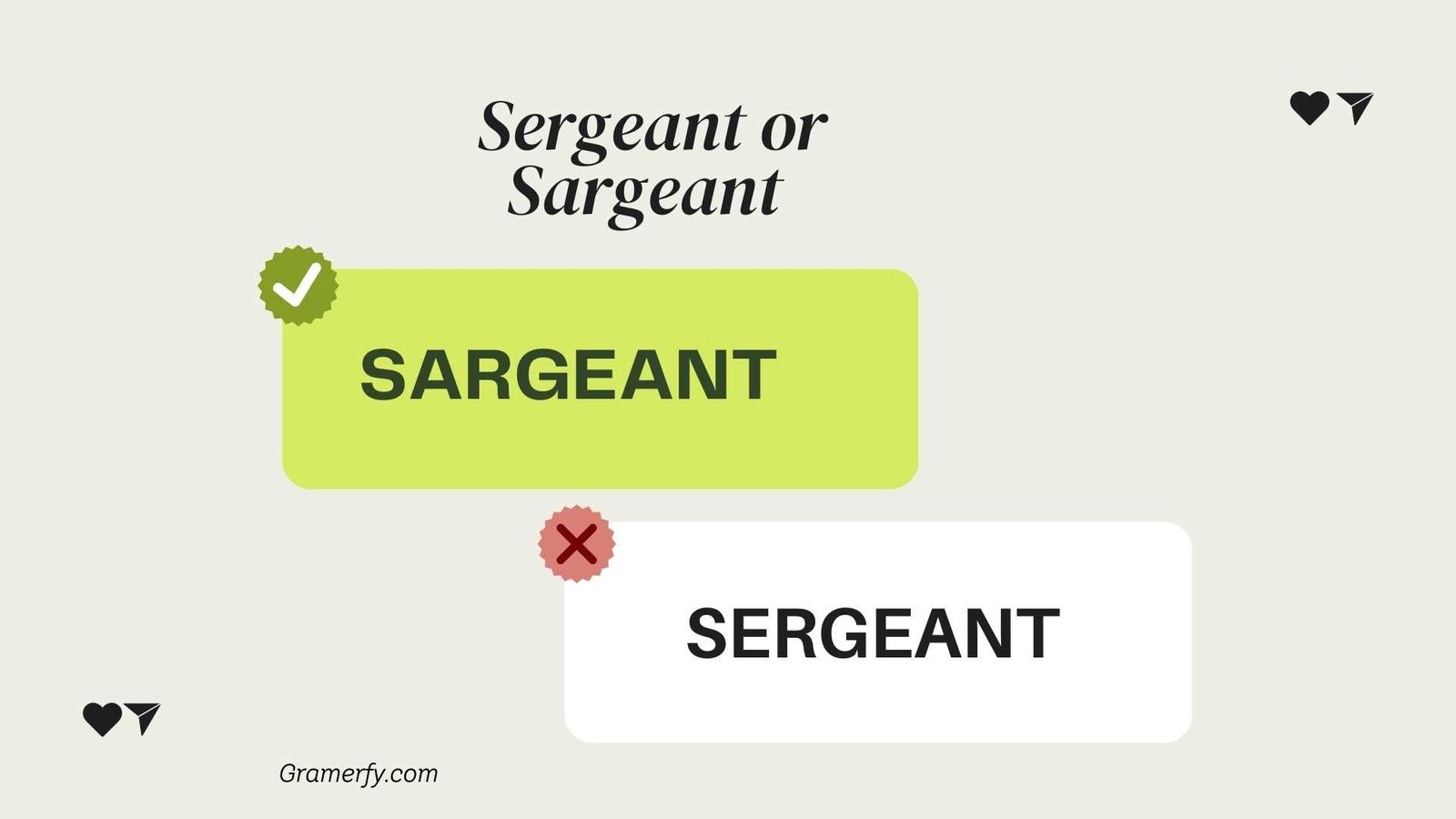
The difference between Sergeant and Sargeant often confuses many, especially when reading military, police, or historical texts. Both terms seem similar in spelling and pronunciation, yet only one is correct in official use.
Understanding this distinction helps in proper writing, official documentation, and even casual conversation. Knowing which spelling reflects the proper rank shows attention to detail and respect for formal titles.
Researching military history, watching films, or reading novels, spotting the right form becomes essential. This guide will clarify everything you need to know about these terms, making it easier to use the correct one every time.
What Does “Sergeant” Mean?
The word sergeant refers to a specific rank in the military or police force. It is commonly used in English-speaking countries like the United States, the United Kingdom, Canada, and Australia.
- Military Meaning: A sergeant is a non-commissioned officer who has responsibilities such as supervising soldiers, training recruits, and maintaining discipline.
- Police Meaning: In law enforcement, a sergeant supervises officers and ensures that daily operations run smoothly.
Key points:
- A sergeant usually ranks above a corporal but below a lieutenant.
- It is a position of authority, leadership, and responsibility.
What About “Sargeant”?
Many people mistakenly write sargeant because it sounds similar to sergeant when spoken. However, sargeant is incorrect in formal writing.
- Sargeant is often used informally as a phonetic spelling or nickname for a sergeant, especially in conversations or casual writing.
- It is not accepted in dictionaries or official documents.
Tip: If you are writing a formal article, a report, or addressing a real military or police rank, always use sergeant.
Correct Usage: Sergeant vs Sargeant
Here’s how you should use the words:
| Word | Correct Usage | Notes |
| Sergeant | “Sergeant Smith led the soldiers during the training exercise.” | Official spelling for military and police. |
| Sargeant | “Hey, Sargeant, are you free for lunch?” (informal, spoken) | Only casual or conversational use; not official. |
Key takeaway: Sergeant is always correct in writing. Sargeant is just a casual or mistaken spelling.
Common Mistakes & Spelling Tips
Mistakes to Avoid
- Writing sargeant in formal documents.
- Confusing the pronunciation with spelling.
- Using sergeant as a general title without context.
Spelling Tips
- Remember the “e” comes first: sergeant, not sargeant.
- Break it down: ser-g-e-ant (three syllables: ser-ge-ant).
- Think of “serve” to remember the “ser” at the beginning.
Examples of Correct Usage
Military Context
- Sergeant Johnson inspected the troops before the parade.
- Every new recruit must report to their sergeant for guidance.
Police Context
- Sergeant Lee directed the traffic officers during the festival.
- The sergeant issued orders to maintain law and order.
Informal Context (Casual Speech)
- “Hey Sarge, can you help me with this?” (spoken, acceptable informally)
- “Sargeant Miller is on his way.” (incorrect in writing, casual nickname only)
Why People Confuse Sergeant and Sargeant
- Pronunciation: In many English accents, sergeant sounds like sargeant.
- Lack of familiarity: Not everyone interacts with the military or police regularly.
- Informal use in media: Movies, TV shows, and novels sometimes spell it as “sargeant” for dialogue.
Pronunciation Guide
- Sergeant: /ˈsɑːrdʒənt/ (sounds like “sahr-jent”)
- Sargeant: Typically pronounced the same but is not standard.
Tip: Always match your spelling to the official pronunciation: sergeant.
FAQs (People Also Ask)
1. Is “sargeant” correct?
No, sargeant is not correct in formal writing. Always use sergeant for official documents.
2. Can I call someone “Sarge”?
Yes! Sarge is an informal nickname for a sergeant. It is commonly used in casual speech.
3. How do you spell sergeant in British English?
The spelling sergeant is the same in both British and American English.
4. Can “sergeant” be used for female officers?
Absolutely! The rank sergeant applies to all genders. You may see Sergeant Smith or Sergeant Johnson regardless of gender.
5. How do I remember the correct spelling?
Think of “serve” + “geant”: ser + geant = sergeant. This helps avoid the “sargeant” mistake.
Conclusion
Confusing sergeant and sargeant is common, but it is easy to avoid once you understand the rules. Sergeant is always correct in official writing, while sargeant is informal or a phonetic mistake.
By following our tips and examples, you can confidently use the word in military, police, and everyday contexts. Always remember: “Sergeant serves with an e, not an a!”