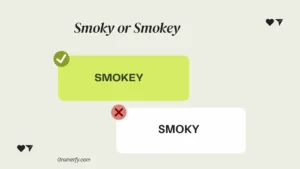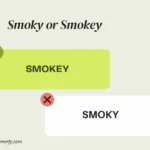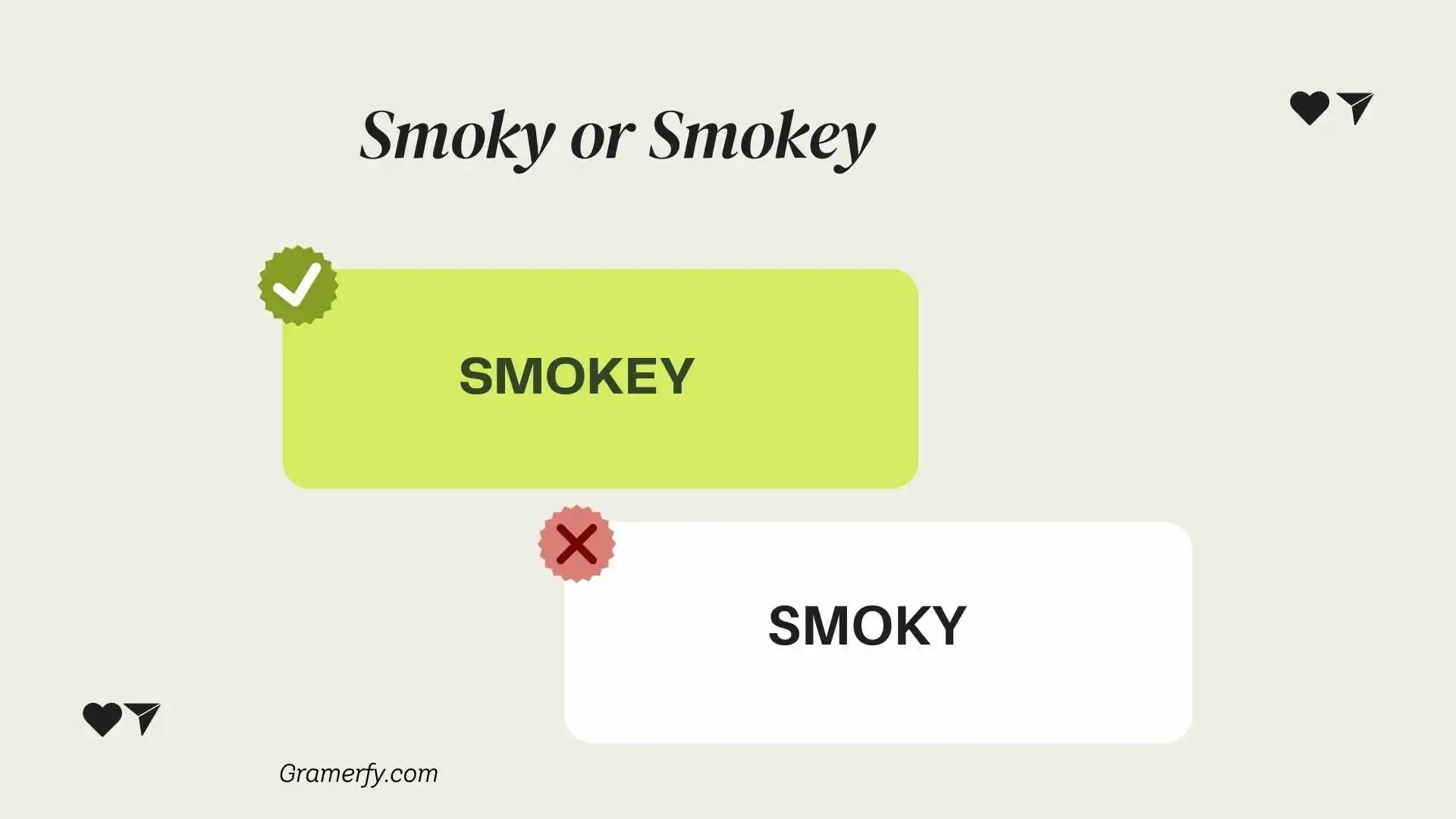
Words that look almost identical can still create confusion, and “Smoky or Smokey” is a perfect example. Many writers, bloggers, and even native English speakers often pause and wonder which spelling is actually correct.
Is it “smoky” without the extra e, or should it be written as “smokey” with the added letter? At first glance, both versions seem right, yet their usage can change depending on context, style, or even tradition.
Understanding the difference matters more than you might think. You’re describing a smoky barbecue flavor, a smoky mountain view, or referencing a well-known name, choosing the correct spelling can improve clarity and professionalism in your writing.
What Does “Smoky” Mean?
Smoky is the standard and more commonly used spelling. It describes something that produces smoke, smells of smoke, or has the appearance of smoke.
Examples of “Smoky” in Sentences:
- The smoky air made it hard to breathe.
- She enjoyed the smoky flavor of the grilled barbecue.
- The room was filled with a smoky haze after the fire.
Key points about “smoky”:
- Always use smoky when referring to smoke itself or smoke-like qualities.
- It is widely accepted in both American and British English.
What Does “Smokey” Mean?
Smokey is less common and usually used as a proper noun, nickname, or brand name. For example:
- Smokey Bear is the famous forest fire prevention mascot.
- Some people may nickname someone Smokey if they like smoky flavors or have a mysterious persona.
Examples of “Smokey” in Sentences:
- I bought a Smokey barbecue sauce from the store.
- Have you ever watched Smokey and the Bandit?
- My dog’s name is Smokey because of his gray fur.
Key points about “smokey”:
- Rarely used as an adjective in standard grammar.
- Often capitalized when used as a name or brand.
Smoky vs. Smokey: Quick Comparison
| Feature | Smoky | Smokey |
| Meaning | Produces or resembles smoke | Usually a name or brand |
| Usage | Adjective describing smoke | Proper noun or nickname |
| Capitalization | Lowercase in sentences | Often capitalized |
| Common Example | Smoky mountains, smoky flavor | Smokey Bear, Smokey the cat |
| Frequency | Very common | Less common |
Common Mistakes and Spelling Tips
Even native speakers sometimes mix these up. Here’s how to avoid mistakes:
Common Mistakes:
- Writing “smokey flavor” instead of “smoky flavor”. ✅ Correct: “I love the smoky flavor of the grilled steak.”
- Using smoky as a proper noun without capitalization. ✅ Correct: “I watched Smokey Bear on TV.”
Simple Tips to Remember:
- If describing smoke, flavor, or appearance, use smoky.
- If it’s a name, brand, or character, use Smokey.
- Think of “Smokey Bear”—it’s a unique, proper noun.
Examples in Everyday English
Here are some more examples to make it crystal clear:
Using Smoky:
- The barbecue gave off a smoky aroma.
- I love sitting by the fireplace in the smoky evening.
- Her eyes had a smoky look because of the makeup.
Using Smokey:
- Smokey the cat always sleeps on the sofa.
- We watched an old movie called Smokey and the Bandit.
- My favorite sauce is Smokey BBQ.
When to Avoid Confusion
- Smoky vs. Smokey in food writing: Always use smoky for flavors or aromas.
- Smoky vs. Smokey in nature writing: Mountains, sunsets, and foggy scenes use smoky.
- Smokey in popular culture: Only use when referring to brands, nicknames, or fictional characters.
FAQs (People Also Ask)
1. Is it “smoky” or “smokey”?
Answer: Use smoky for general adjectives describing smoke. Use Smokey for names or brands.
2. Can I use “smokey” for a smoky flavor?
Answer: No, the correct spelling is smoky. “Smokey flavor” is considered incorrect.
3. Why do people confuse these words?
Answer: They sound identical, but the context decides the correct spelling. Adjective vs. proper noun is the main distinction.
4. Is “Smokey Bear” spelled with an E or without?
Answer: It’s spelled Smokey Bear, with an E, because it’s a proper noun.
5. Are there other words similar to “smoky” and “smokey”?
Answer: Yes. Examples include:
- Flaky / Flakie – usually just flaky
- Spicy / Spicey – correct spelling: spicy
Conclusion
Choosing between smoky and smokey is easier than it seems. Remember: smoky is the adjective for smoke, flavor, or appearance, while Smokey is mostly a name or brand. By keeping this simple rule in mind, you can avoid spelling mistakes, write clearly, and sound more professional.
Next time you describe a smoky mountain, smoky sunset, or smoky barbecue, you’ll know exactly which spelling to use. And when referring to Smokey Bear or a nickname, the proper noun keeps your writing correct and polished. With these tips, the confusion between smoky and smokey will be a thing of the past!