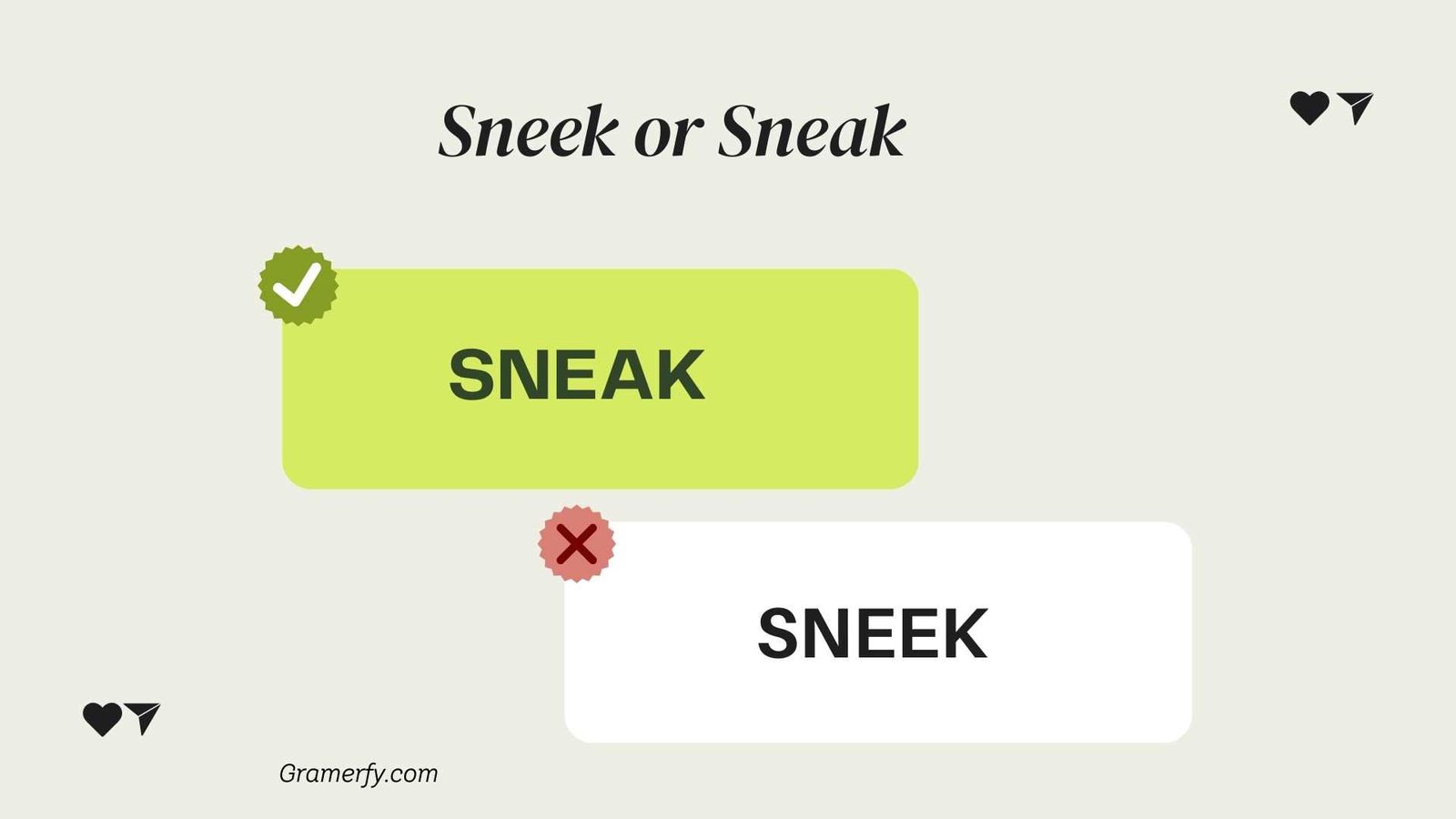
When it comes to the words “sneek” and “sneak,” the distinction is more than just spelling—it’s about correctness and clarity. Sneak is the proper English word, widely accepted in writing and conversation, meaning to move quietly or secretly.
On the other hand, sneek is often a common misspelling, which can create confusion or make your writing look unpolished.
Understanding this difference not only improves your grammar but also helps you communicate with confidence, whether you’re crafting a story, texting a friend, or writing professionally.
What Does “Sneak” Mean?
The word sneak is a verb and sometimes a noun in English. It is widely accepted and recognized in dictionaries.
As a verb:
Sneak means:
- To move quietly or secretly to avoid being noticed.
- To do something in a secretive or sly way.
Examples:
- The cat sneaked into the kitchen while everyone was asleep.
- He tried to sneak a look at the exam answers.
- Don’t sneak out of the party without saying goodbye.
As a noun:
Sneak can also refer to a person who is secretive or betrays trust.
Example:
- Don’t be a sneak and tell everyone my secret.
What About “Sneek”?
The word sneek is actually incorrect in standard English.
- Some people type or write sneek by mistake because it sounds similar to sneak.
- Dictionaries do not recognize sneek as a correct word.
- Using sneek in writing can make your text look unprofessional or incorrect.
Example of wrong usage:
- ❌ He tried to sneek into the room.
✅ Correct version: He tried to sneak into the room.
Sneek vs Sneak: Quick Comparison Table
| Feature | Sneak | Sneek |
| Correctness | ✅ Correct | ❌ Incorrect |
| Part of speech | Verb, Noun | — |
| Meaning | Move secretly or slyly | None |
| Common mistakes | Often misspelled as “sneek” | — |
| Examples | He sneaked away quietly. | ❌ He sneeked away quietly. |
How to Use “Sneak” Correctly
Here are some practical tips:
- Remember the spelling – it has ea in the middle: s-n-e-a-k.
- Verb forms – The past tense can be either:
- sneaked (most common, standard)
- snuck (informal, mainly in American English)
- sneaked (most common, standard)
- Context matters – Use sneak for secretive actions or sly behavior.
Examples:
- She sneaked a chocolate from the jar.
- He snuck out of class to meet his friends.
- Don’t sneak around like that; it’s suspicious.
Common Mistakes with “Sneak”
Even native speakers sometimes make mistakes. Here are the most common ones:
- Spelling mistake: writing sneek instead of sneak.
- Past tense confusion: using sneaked vs snuck incorrectly.
- Wrong context: using sneak for normal actions instead of secretive ones.
Examples:
- ❌ He sneeked into the room.
✅ He sneaked into the room. - ❌ I snucked out of the party.
✅ I snuck out of the party.
✅ I sneaked out of the party.
Sneak in Everyday English
Here’s how sneak can appear in daily life:
- At home: “I sneaked some cookies before dinner.”
- At school: “He sneaked a look at his friend’s paper.”
- At work: “She tried to sneak in without being noticed.”
- Figurative use: “He’s a sneak; never trust him with secrets.”
Sneak vs Snuck: Which Past Tense to Use?
Many learners ask: “Should I say sneaked or snuck?”
| Past Tense | Usage |
| Sneaked | Standard English, formal writing, grammatically correct everywhere. |
| Snuck | Informal, common in spoken American English, widely accepted but not formal. |
Examples:
- Formal: He sneaked out of the meeting quietly.
- Informal: He snuck out of the meeting quietly.
Tips to Remember the Correct Spelling
- Sneak has an “a”, not double “e”: S-N-E-A-K.
- Think: “Sneak quietly, not sneek loudly.”
- If in doubt, use sneaked for past tense in writing.
FAQs (People Also Ask)
1. Is sneek a correct word?
❌ No, “sneek” is a common misspelling. Always use sneak.
2. What is the past tense of sneak?
✅ Standard past tense: sneaked
✅ Informal (American English): snuck
3. Can sneak be used as a noun?
✅ Yes, for a person who is secretive or betrays trust.
4. How do you pronounce sneak?
- /sniːk/ – sounds like “s-neek”
5. Is “snuck” correct?
✅ Informally yes, especially in spoken English. ❌ In formal writing, prefer sneaked.
Conclusion
In conclusion, understanding the difference between “sneek” and “sneak” is essential for clear and correct communication. While “sneak” is the proper and widely accepted spelling used to describe moving quietly or secretly, “sneek” is often just a common misspelling seen in informal writing or online messages.
Using the correct form not only shows attention to detail but also maintains professionalism in your writing. Many people confuse the two because they sound identical, yet sticking with “sneak” ensures your message is accurate and easily understood.