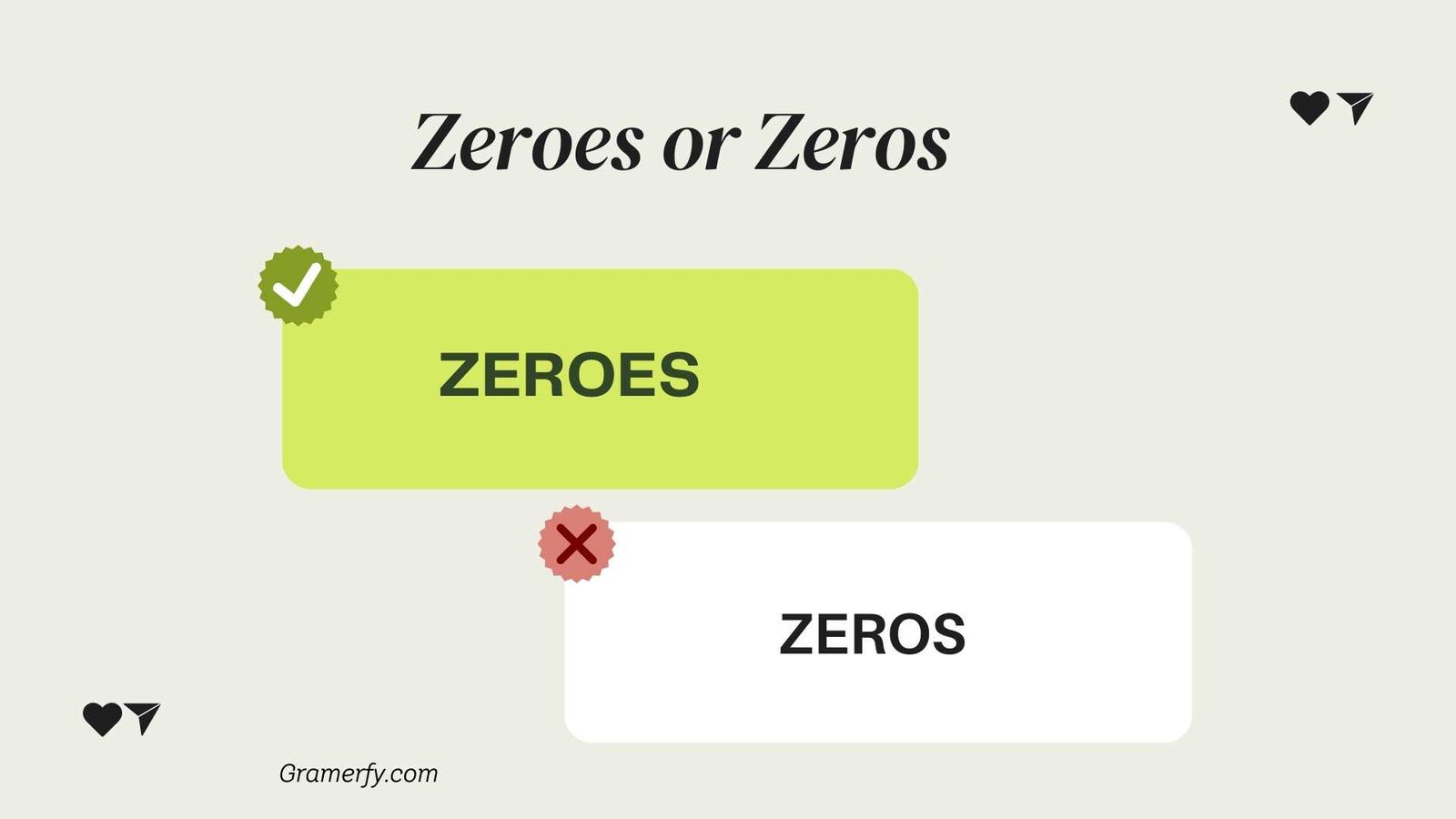
Have you ever paused while writing a number and wondered whether “zeroes” or “zeros” is the correct spelling? You’re not alone. This tiny spelling choice creates big confusion for students, writers, bloggers, and even professionals who work with numbers every day.
Both versions look right. Both sound right. Yet only one fits modern English standards in most situations. That’s why people across the internet keep searching for the difference between Zeroes or Zeros and why you’re here right now.
In this guide, you’ll discover which spelling is correct, why one form became more popular, and how to use each version with confidence. You’ll also see real-world examples that make everything crystal clear.
Meaning of “Zero”
The word zero is a number, representing nothing or the absence of quantity. It is used in math, science, sports, and even everyday conversations.
- Example 1: The temperature dropped to zero last night.
- Example 2: He scored zero points in the game.
Zeroes or Zeros: Which One is Correct?
However, their usage depends on the context and the variety of English you are following.
- Zeros – More common in American English. Used in most formal and informal writing.
- Zeroes – More common in British English, though still less frequent than zeros in many texts.
Tip: If you are writing for an American audience, stick with zeros.
When to Use Zeros
Zeros is the standard plural form of zero in most cases.
- Example 1: The number 100 has two zeros.
- Example 2: Account numbers often contain many zeros.
- Example 3: In coding, sometimes we need to add leading zeros.
When to Use Zeroes
- Example 1: The team scored three zeroes in the championship.
- Example 2: In cricket, he had four zeroes in his record.
- Example 3: Some older British textbooks use zeroes instead of zeros.
Zeroes vs Zeros: Quick Comparison Table
| Feature | Zeros | Zeroes |
| Usage | American English | British English |
| Context | Math, Technology, Finance | Sports, Informal writing |
| Frequency | Very common | Less common |
| Example Sentence | 100 has two zeros. | He scored three zeroes. |
Common Mistakes with Zeroes/Zeros
Here are some mistakes people often make:
- Using zeroes in American formal writing
- ❌ Wrong: The number has three zeroes.
- ✅ Correct: The number has three zeros.
- ❌ Wrong: The number has three zeroes.
- Confusing zero with the letter “O”
- ❌ Wrong: Your password is “pa55wOrd0”.
- ✅ Correct: Your password is “pa55w0rd”.
- ❌ Wrong: Your password is “pa55wOrd0”.
- Mixing plural forms in the same document
- ❌ Wrong: The account has two zeros and three zeroes.
- ✅ Correct: Stick to one style: all zeros or all zeroes.
- ❌ Wrong: The account has two zeros and three zeroes.
Spelling Tips for Zeroes/Zeros
- Use zeroes mainly in British English or informal contexts.
- Avoid switching between the two in a single text.
- Pronunciation is the same: /ˈzɪəroʊz/.
Multiple Examples in Sentences
Using Zeros
- The binary system uses only ones and zeros.
- There are five zeros in a million.
- Make sure your bank account number doesn’t start with extra zeros.
- Computers often ignore leading zeros in numbers.
Using Zeroes
- In baseball, the team recorded two scoreless zeroes last week.
- He had four consecutive zeroes in his bowling score.
- Some traditional British math books list zeroes instead of zeros.
FAQs About Zeroes or Zeros
1. Is “zeros” or “zeroes” correct in American English?
Answer: In American English, zeros is preferred and widely used. Zeroes is rare.
2. Can I use “zeroes” in British English?
Answer: Yes, British English accepts both zeroes and zeros, but zeros is also understood.
3. How do I know which spelling to use in formal writing?
Answer: Stick with zeros, as it is universally accepted and safe for formal writing, reports, and academic papers.
4. Are there other words like “zero” with double plural forms?
Answer: Yes, words like tomato/tomatoes and potato/potatoes have alternative plurals, usually with “-es” in British English.
5. Do zeros and zeroes sound different?
Answer: No. Both are pronounced the same way: /ˈzɪəroʊz/.
Conclusion
To summarize, both zeros and zeroes are correct plural forms of zero, but their usage depends on context and audience:
When in doubt, use zeros. Consistency is key, and choosing one form throughout your text will make your writing look professional and polished.